 1 / 4
1 / 4Key characteristics
- Family
- Hamamelidaceae
- Height
- 10 to 16 feet
- Width
- 4 to 5 feet
- Flower color
- Pale yellow
- Foliage color
- Green, turning yellow in autumn
- Bloom time
- Late winter to early spring
- Light
- Full sun to partial shade
- Water
- Average; prefers moist, well-drained soil
- Maintenance
- Low; minimal pruning after flowering if necessary
- Growing zone
- USDA zones 6 to 9
- Wildlife
- Attracts bees
Shrubs
Hamamelis japonica var. arborea
Japanese Witch Hazel
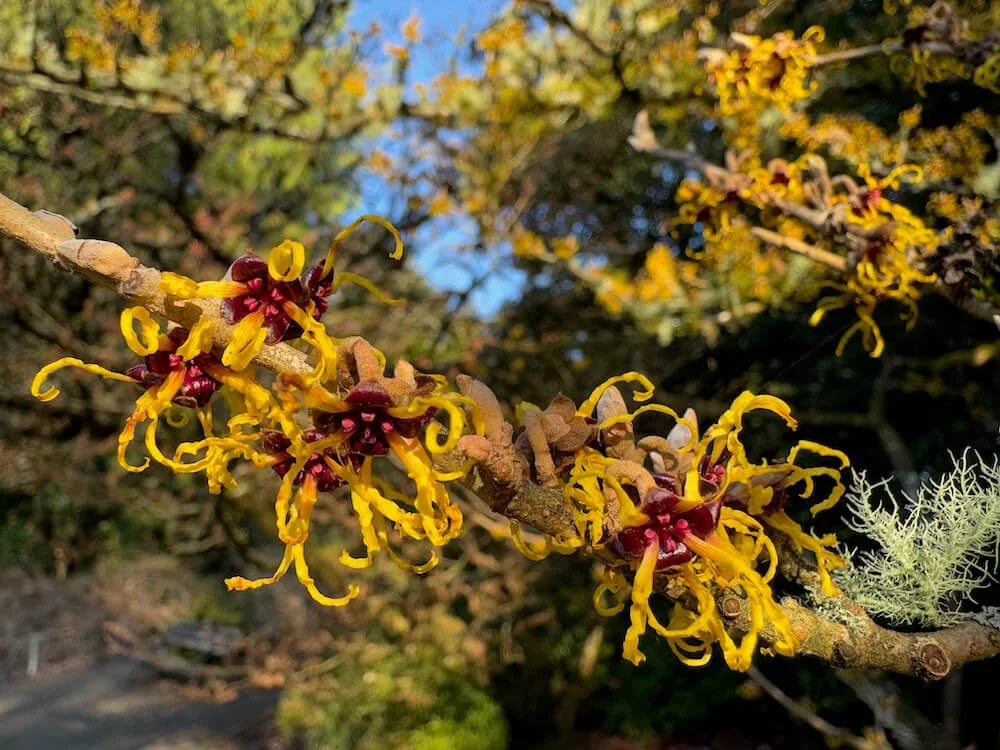
Hamamelis japonica var. arborea, commonly known as Japanese witch hazel, is a deciduous shrub that blooms from late winter into early spring. Its fragrant, golden-yellow flowers feature small red centers and appear on leafless branches, providing a bright display during the colder months. As the seasons progress, the broad oval leaves turn yellow in autumn, adding to its ornamental appeal.
Originating from Japan, arborea is notable for its upright growth habit, which distinguishes it from other more spreading forms of Japanese witch hazel.
Works well in
- Sun Gardens
- Fragrant Gardens
- Winter Interest
- Specimen Plants
Companion plants
Boxwoods · Dwarf Korean fir · Bergenia · Maiden grass · Snowdrops · Agapanthus
Design tip
The narrow, upright habit makes ‘Arborea’ useful where a witch hazel is desired without a broad spread. Its vertical form can anchor a border while fragrant winter flowers and yellow autumn foliage provide interest at opposite ends of the season.
Where to see it
This plant can be seen at the Washington Park Arboretum.
More shrubs
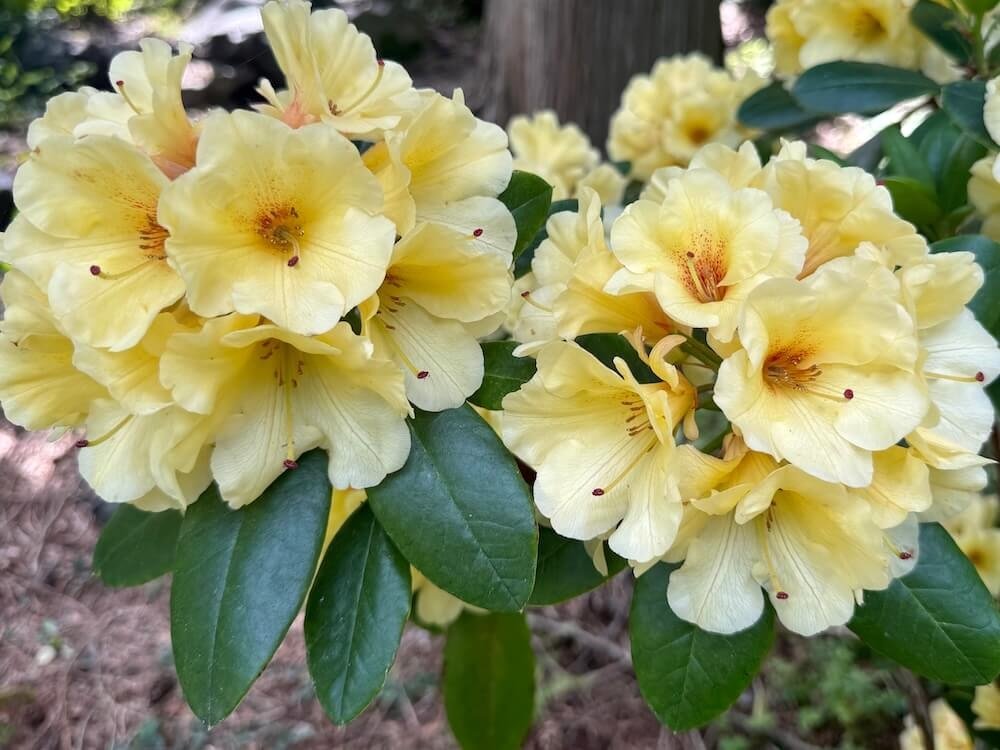
Rhododendron 'Wow'
Wow Rhododendron
Blooms creamy yellow with red spotted throat
Full sun to part shade
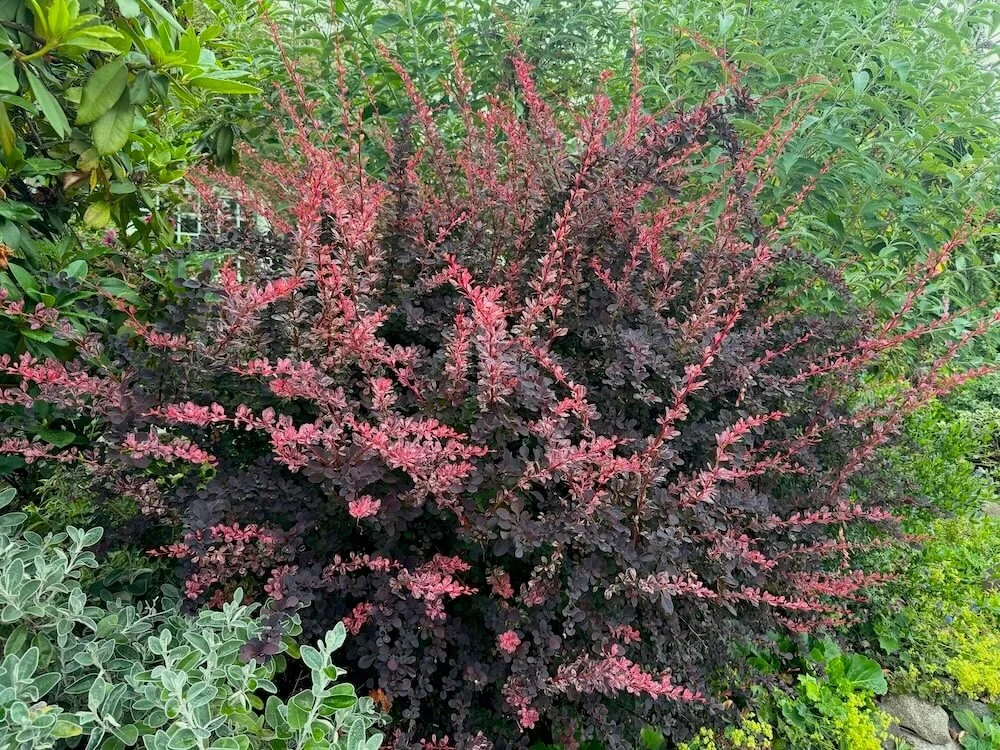
Berberis thunbergii atropurpurea ‘Rose Glow’
Rose Glow Japanese Barberry
Blooms yellow
Full sun to partial shade
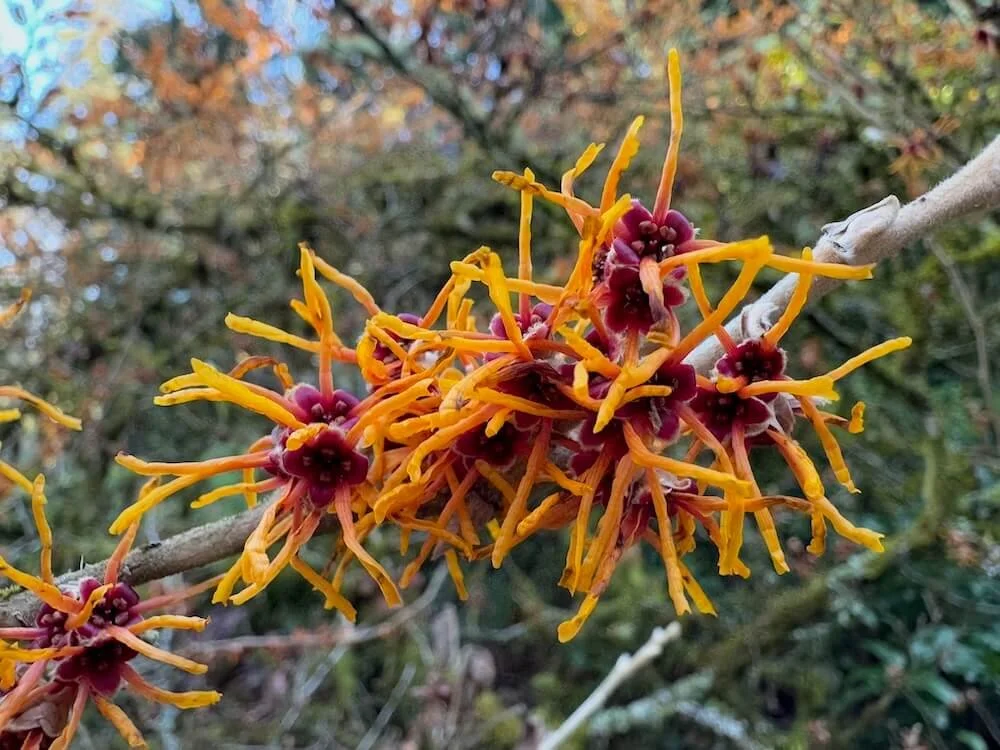
Hamamelis x intermedia 'Winter Beauty'
Winter Beauty Witch Hazel
Blooms golden-yellow
Full sun to partial shade
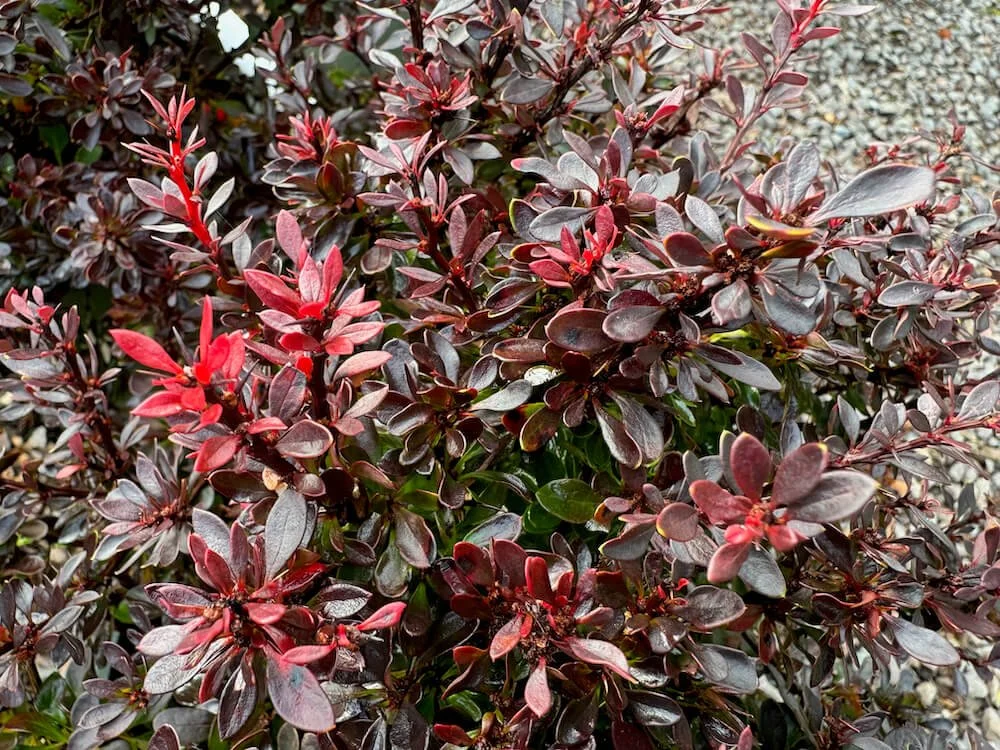
Berberis thunbergii 'Pygruzam'
Pygmy Ruby Japanese Barberry
Blooms small, pale yellow flowers
Full sun to partial shade