 1 / 4
1 / 4Key characteristics
- Family
- Rosaceae
- Height
- 4 to 6 feet
- Width
- 4 to 5 feet
- Flower color
- Large clusters of pale pink flowers
- Foliage color
- Bronze, burgundy
- Bloom time
- Late spring to early summer
- Light
- Full sun to partial shade
- Water
- Regular; can be drought tolerant
- Maintenance
- Low; prune after flowering to maintain shape
- Growing zone
- USDA Hardiness Zones 4 to 8
- Wildlife
- Seed pods provide food for birds
Shrubs
Physocarpus opulifolius ‘Petite Plum’
Petite Plum Ninebark
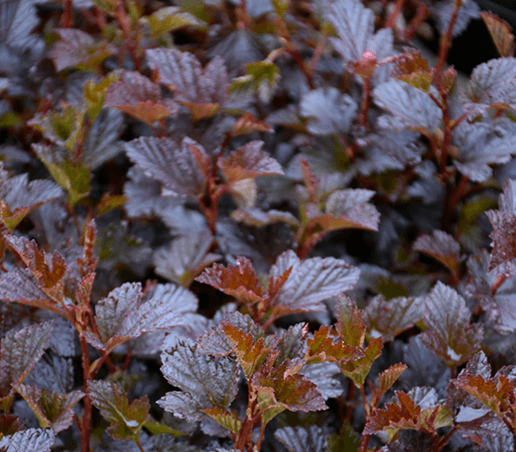
Physocarpus opulifolius 'Petite Plum' produces rounded clusters of white flowers brushed with soft pink in late spring to early summer, followed by decorative dark purple-red seed pods with warm orange tones. Deep plum-purple, lobed leaves densely cover the branches, creating richly colored foliage throughout the growing season. Its compact, upright, rounded habit gives the shrub a tidy appearance, while the peeling bark on mature stems adds texture and winter interest after the leaves fall.
Works well in
- Sun Gardens
- Borders
- Native Gardens
- Bird Gardens
Companion plants
Boxwoods · Dwarf Korean fir · Bergenia · Maiden grass · Snowdrops · Agapanthus
Design tip
Use ‘Petite Plum’ in repeated groups to create a substantial sweep of plum-burgundy foliage. Its compact, mounded form gives the grouping a cohesive shape, while spring flowers and later seed clusters provide changing seasonal interest.
More shrubs
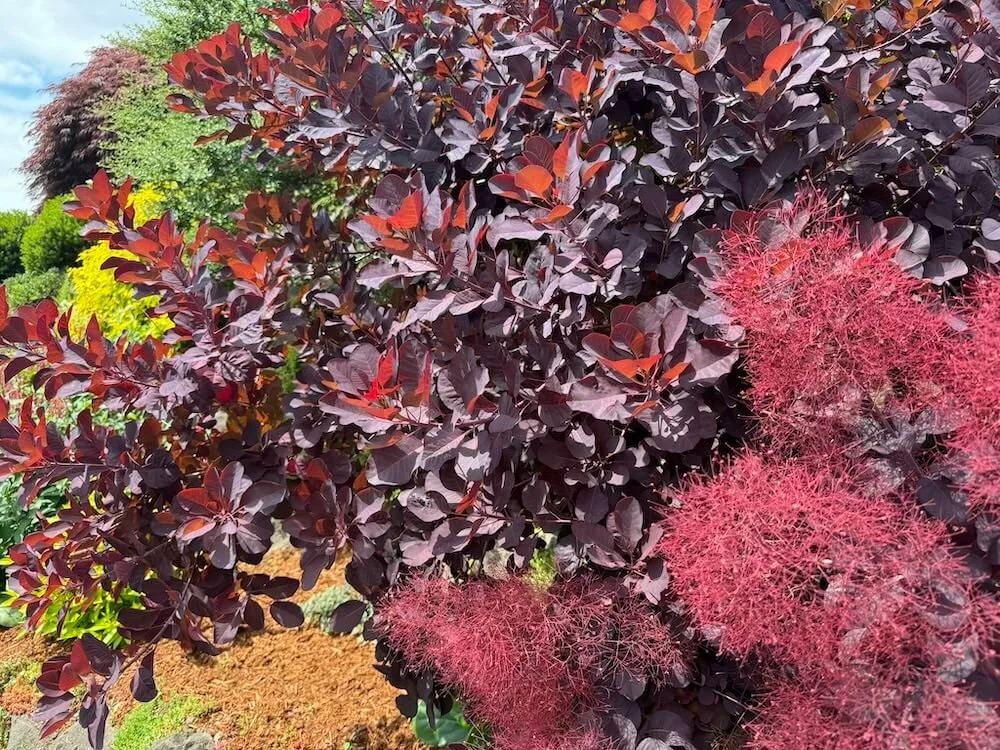
Cotinus coggygria 'Royal Purple'
Royal Purple Smoke Bush
Blooms small, pink flowers surrounded by smoky, purplish-pink plumes
Full sun
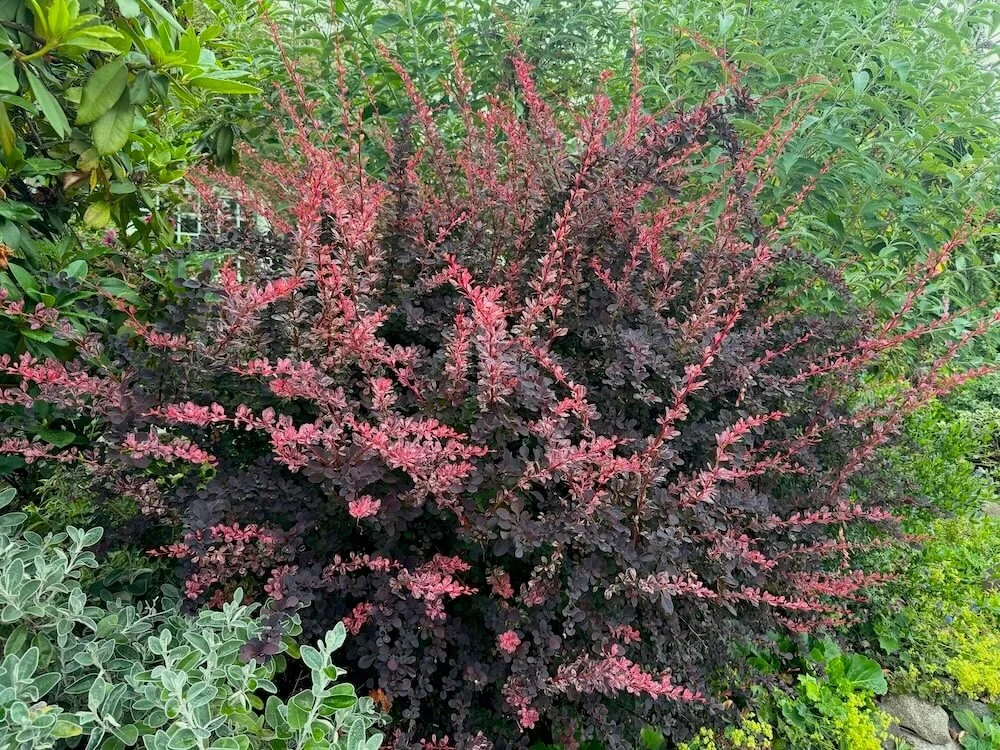
Berberis thunbergii atropurpurea ‘Rose Glow’
Rose Glow Japanese Barberry
Blooms yellow
Full sun to partial shade
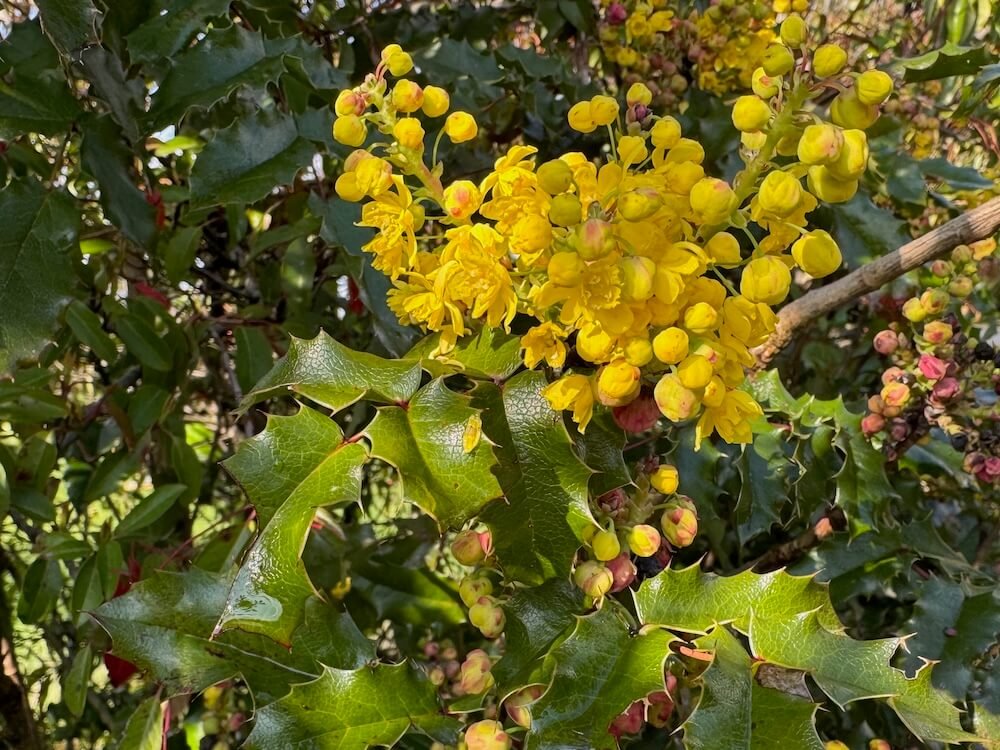
Berberis (Mahonia) aquifolium
Oregon Grape
Blooms bright yellow fragrant flowers borne in dense upright clusters
Partial shade to full shade
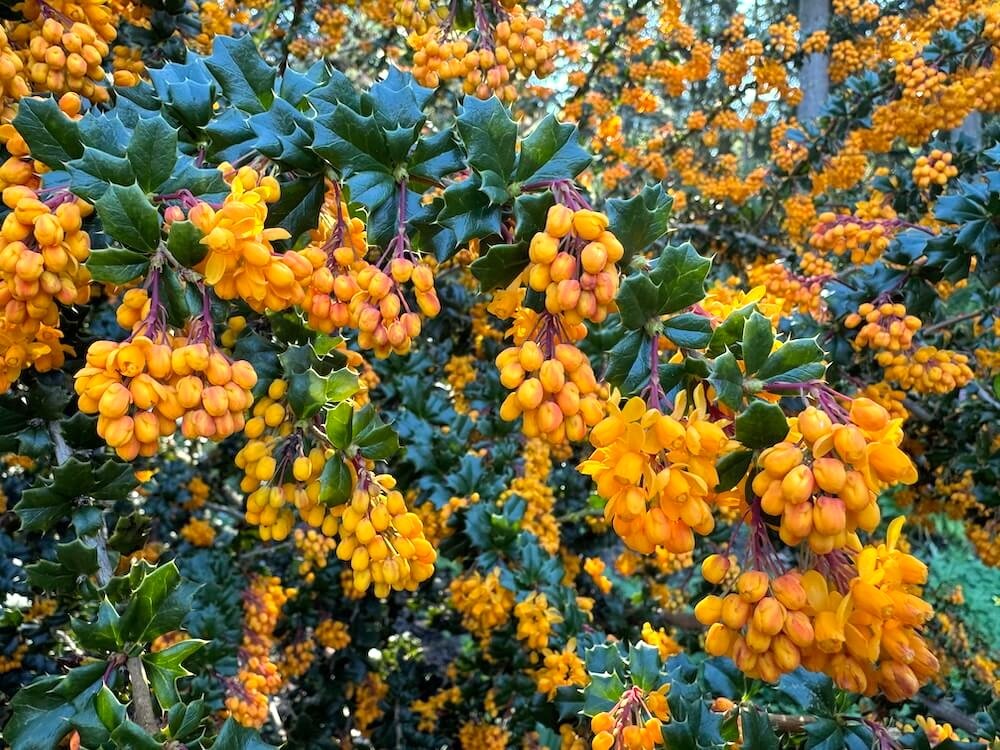
Berberis darwinii
Darwin's Barberry
Blooms deep golden orange to yellow orange flowers borne in drooping clusters
Full sun to partial shade