 1 / 3
1 / 3Key characteristics
- Family
- Ranunculaceae
- Height
- 15 to 20 feet
- Width
- 6 to 8 feet
- Flower color
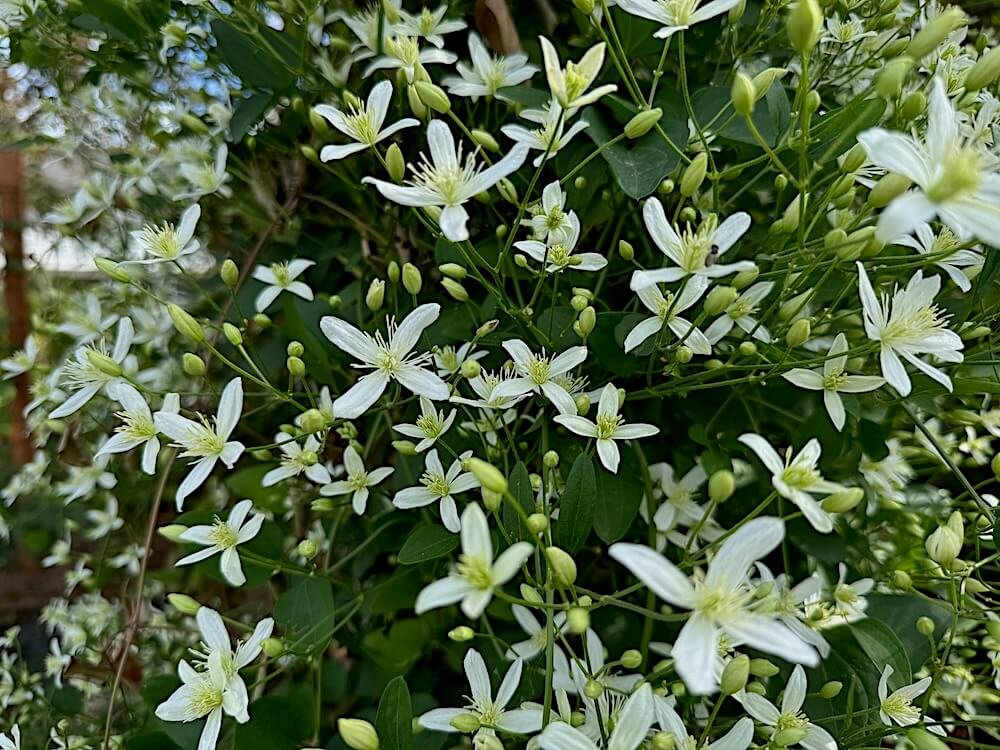
- Fragrant white star-shaped flowers
- Foliage color
- Deciduous green leaves
- Bloom time
- August through October
- Light
- Full sun to partial shade
- Water
- Prefers moist, well-drained soil
- Maintenance
- High; rapid growth requires regular pruning to control spread; prune in late winter or early spring
- Growing zone
- USDA zones 5 to 9
- Wildlife
- Attracts bees and other pollinators; provides cover for small wildlife
Vines
Clematis terniflora
Sweet Autumn Clematis
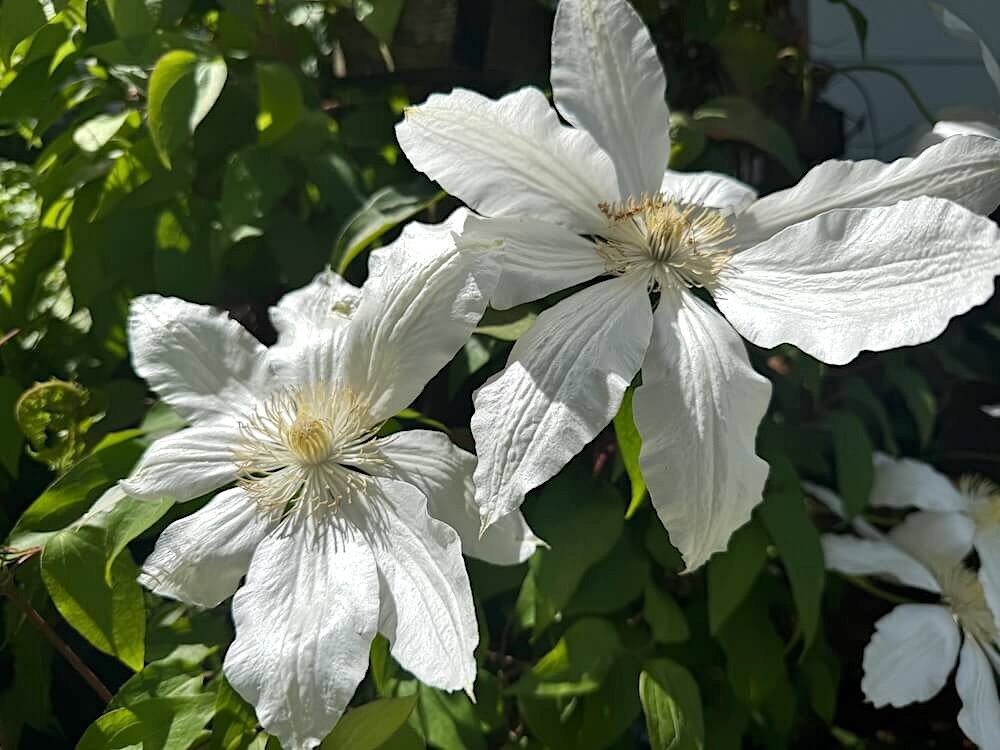
Clematis terniflora, commonly known as sweet autumn clematis, is a vigorous deciduous vine that produces an abundance of small, star-shaped white flowers from late summer into early autumn. The blooms are delicately fragrant, often filling the air with a sweet, pleasing scent. Following the flowering period, the plant develops fluffy seed heads that add an ornamental quality to the vine as the season progresses.
Native to eastern Asia, including regions of Japan and China, Clematis terniflora has been widely cultivated for its ornamental qualities and rapid growth.
Works well in
- Arbors & Trellises
- Fences & Walls
- Vertical Screening
- Cottage Gardens
- Pollinator Gardens
Companion plants
Columbines · Lungworts · Daylilies · Lavender · Heucheras · Lady's mantle
Design tip
Foliage and form do most of the work here, so lean on texture and repetition rather than one flowering moment. Give it something sturdy to climb and keep the base planted with lower perennials, which shades the roots and hides bare stems.
More vines
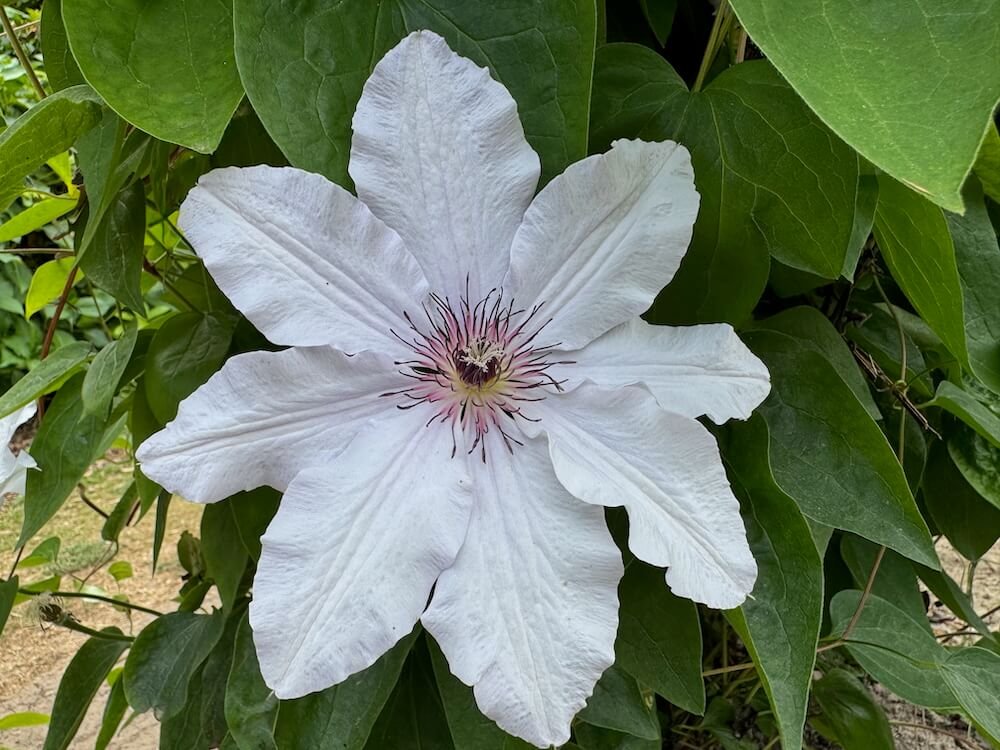
Clematis 'Snow Queen'
Snow Queen Clematis
Blooms pure white, large star-shaped flowers with contrasting burgundy stamens
Full sun to partial shade
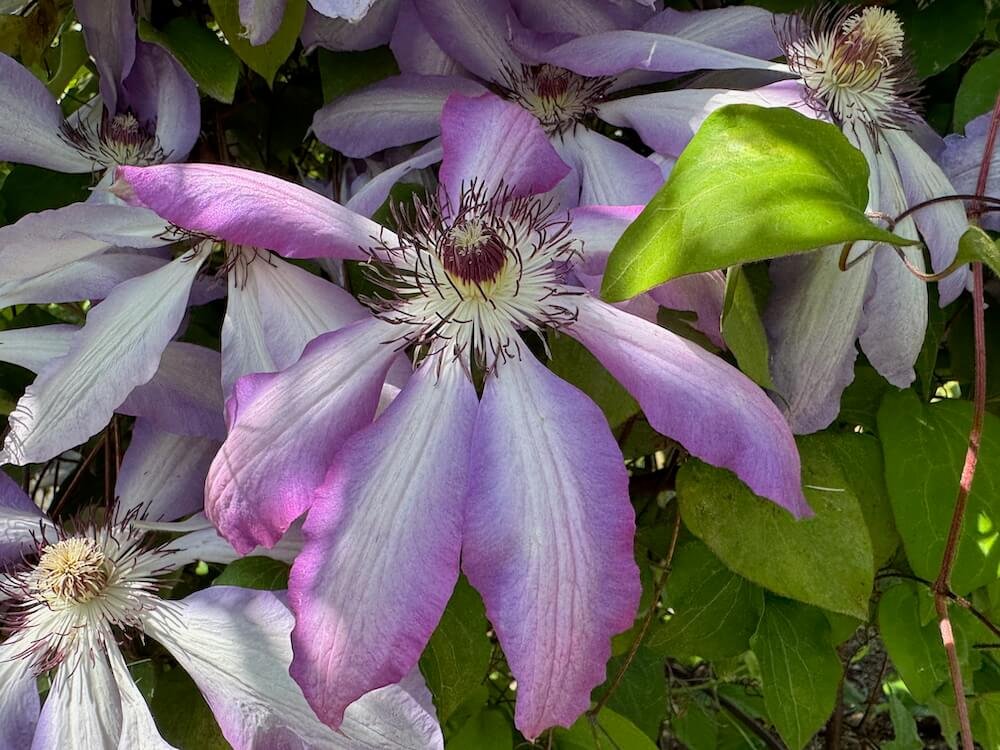
Clematis 'Serafina'
Serafina Clematis
Blooms pale violet-pink with a white central stripe on each petal
Full sun to partial shade
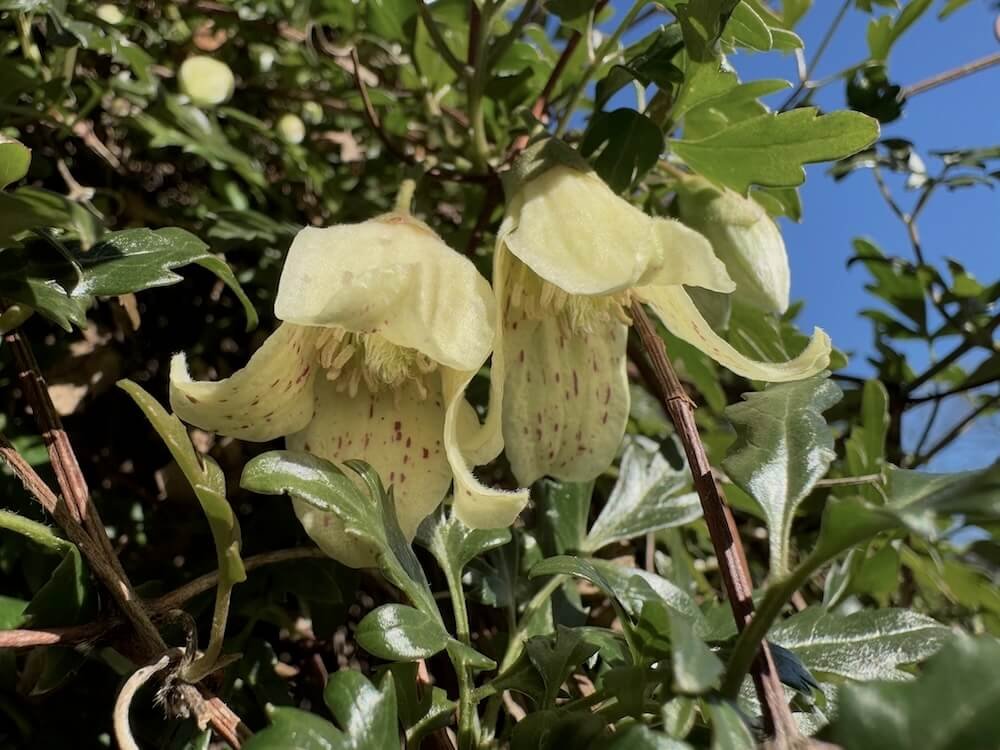
Clematis cirrhosa var. balearica
Fern-leaved Clematis
Blooms creamy-white
Full sun to partial shade
Clematis patens 'Miss Cavell'
Miss Cavell Clematis
Blooms pure white, large star-shaped flowers with yellow centers
Full sun to partial shade