Northwest Blooms · Bulbs
Galanthus nivalis
Snowdrop
- Family
- Amaryllidaceae
- Height
- 3-6 inches
- Width
- 2-3 inches
- Flower color
- White
- Foliage color
- Gray-green
- Bloom time
- Late winter to early spring
- Light
- Partial shade to full shade
- Water
- Moist, well-drained soil
- Maintenance
- Low maintenance; remove spent flowers to prevent seed formation
- Growing zone
- 3-7
- Wildlife
- Attracts early pollinators such as bees and flies
About this plant
Galanthus nivalis, commonly known as Snowdrop, is a perennial bulbous plant native to Europe and the Middle East. The plant features slender, gray-green leaves that arise from the base of the plant and can grow up to 4-8 inches long.
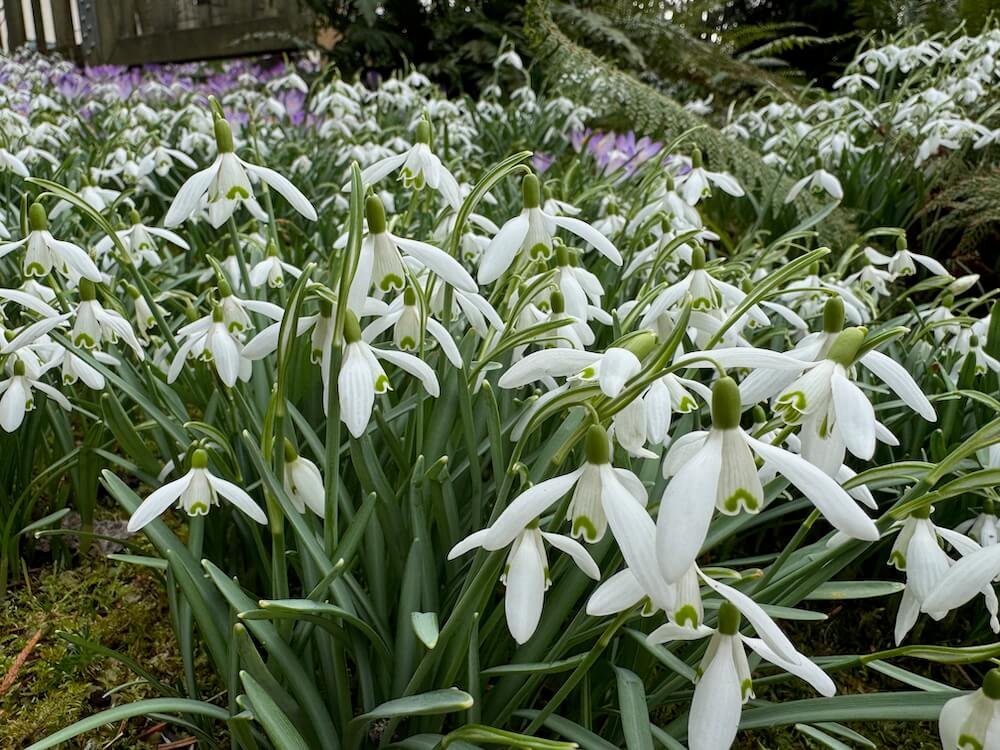
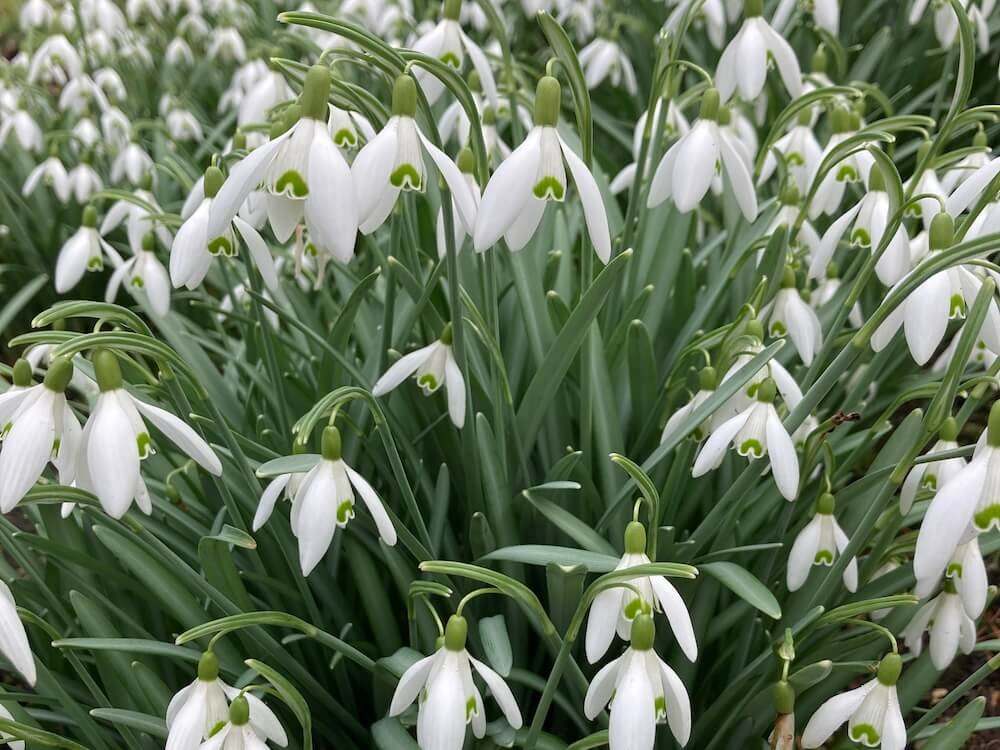
Snowdrops are known for their white, bell-shaped flowers that hang downwards, each flower featuring six petal-like tepals (three outer and three inner). These delicate flowers often appear in late winter to early spring, blooming even when snow is still on the ground, hence the name "snowdrop." The flowers have a sweet, honey-like fragrance that attracts early pollinators like bees and flies.
Galanthus nivalis prefers moist, well-drained soil and partial shade. It is often planted in woodland gardens, under trees, or along paths. Snowdrops can naturalize and form dense colonies over time, making them a popular choice for naturalizing in grassy areas or rock gardens. They are also deer-resistant, making them a great choice for areas with deer browsing.
Works well in
Borders · Shade Gardens · Woodland Gardens · Under Trees · Rock Gardens
Companion plants
Bleeding hearts · Solomon's seal · Ferns · Lungworts · Wild ginger · Hellebores
Design tip
Flowers in the quietest months make this worth a sheltered spot within sight of a window or door. Drift them in uneven groups for a natural look, and interplant with perennials that fill the gap after the leaves die back.
Where to see it
This plant can be seen in the perennial border at the Bellevue Botanical Garden.