Northwest Blooms · Shrubs
Arctostaphylos manzanita
Manzanita
- Family
- Ericaceae
- Height
- 4 to 20 feet
- Width
- 5 to 15 feet
- Flower color
- White to pink
- Foliage color
- Dark green, often with a silvery sheen
- Bloom time
- Late winter to early spring
- Light
- Full sun to partial shade
- Water
- Low
- Maintenance
- Low maintenance
- Growing zone
- 7 to 10
- Wildlife
- Attracts bees and hummingbirds; provides habitat and food for birds and small mammals
About this plant
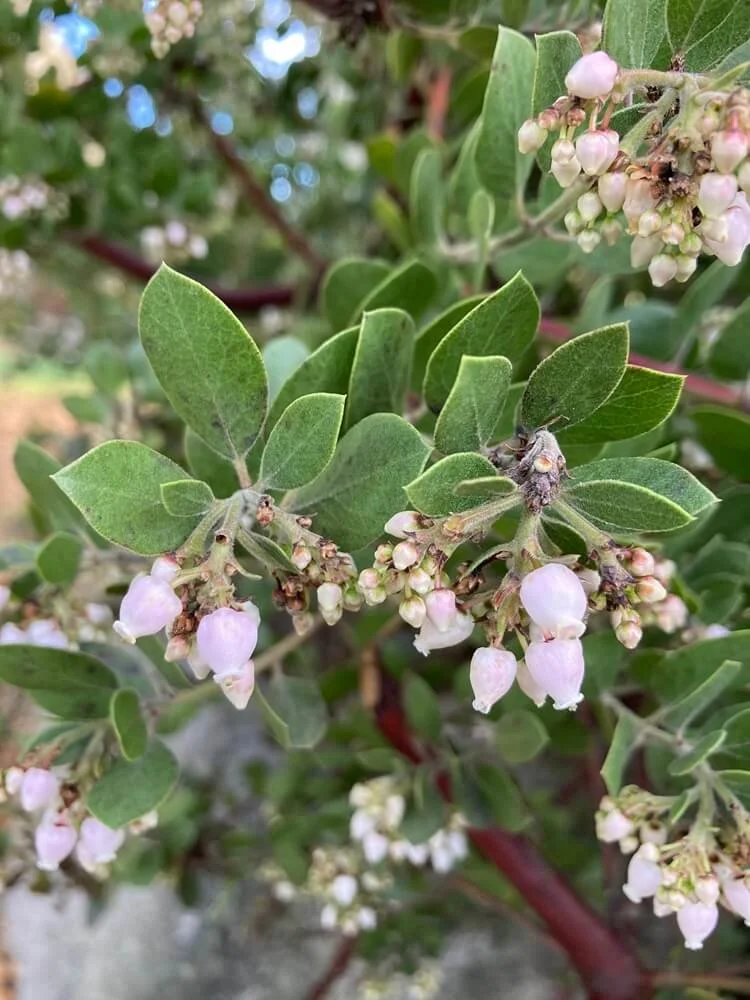
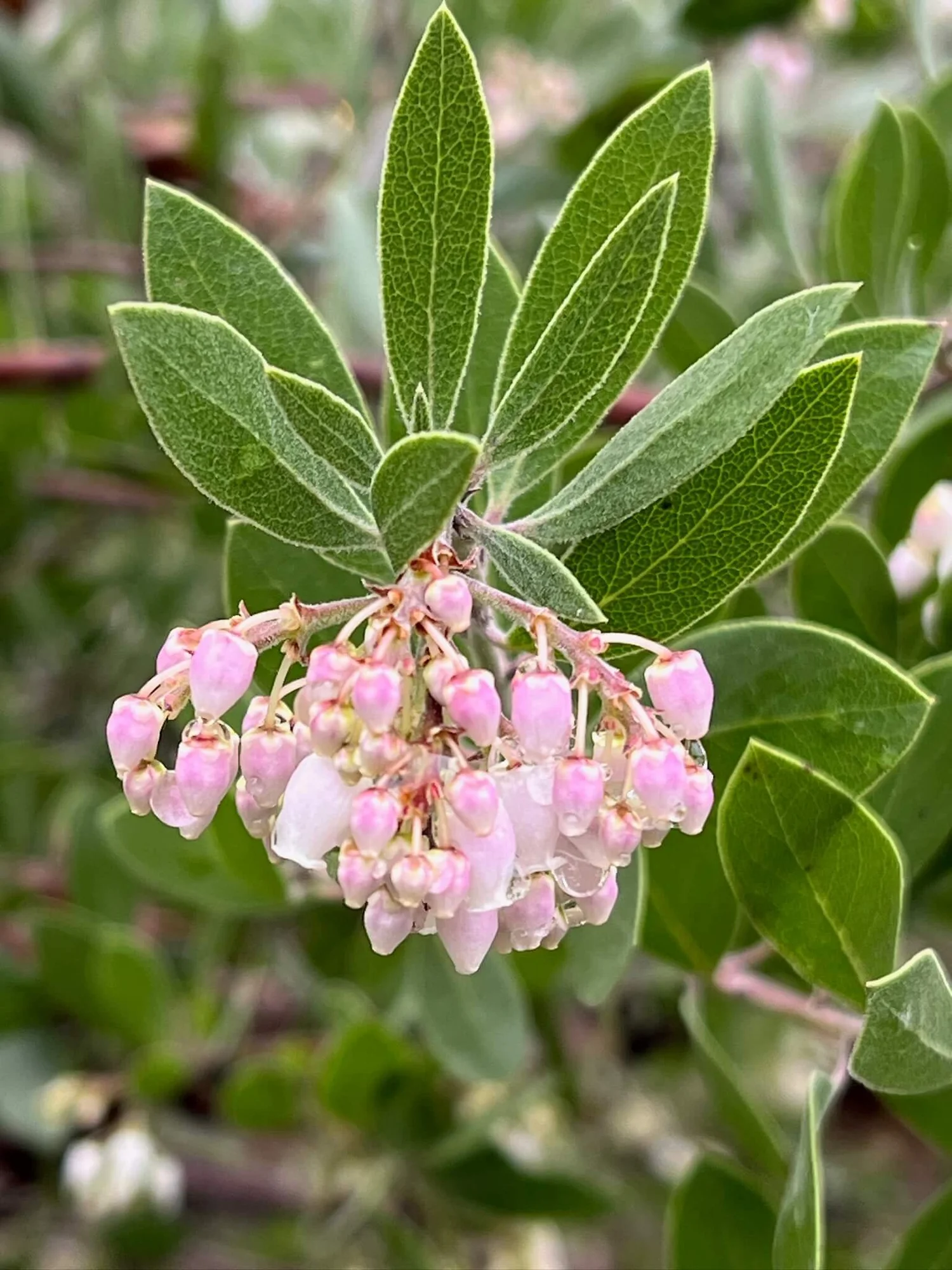
Arctostaphylos manzanita produces clusters of small, urn-shaped white to pale pink flowers from late winter into early spring, attracting hummingbirds, native bees, and other early pollinators before developing reddish-brown berries. Smooth, leathery leaves are gray-green to rich green and remain evergreen throughout the year, creating a dense canopy above handsome mahogany-red bark that becomes increasingly sculptural with age. The twisting branches and colorful bark provide enduring texture and visual interest long after the flowering season.
Native to the Coast Ranges and Sierra Nevada foothills of California, this species is a characteristic component of chaparral and open woodland habitats. It is well suited to native gardens, dry slopes, rock gardens, and wildlife plantings, where its evergreen foliage, ornamental bark, seasonal flowers, and berries provide year-round beauty and habitat value.
Works well in
Native Gardens · Pollinator Gardens · Hummingbird Gardens · Waterwise Gardens
Companion plants
Barberry · Butterfly bush · Feverfew · False sunflower · Chives · Snow-in-summer
Design tip
Plant this manzanita where its beautiful bark and early flowers can be enjoyed from a patio, walkway, or favorite window. Pair it with other drought-tolerant plants to create a welcoming garden that stays colorful, textured, and attractive in every season.