Northwest Blooms · Shrubs
Berberis thunbergii f. atropurpurea 'Atropurpurea Nana'
Red Japanese Barberry
- Family
- Berberidaceae
- Height
- 18 to 24 inches
- Width
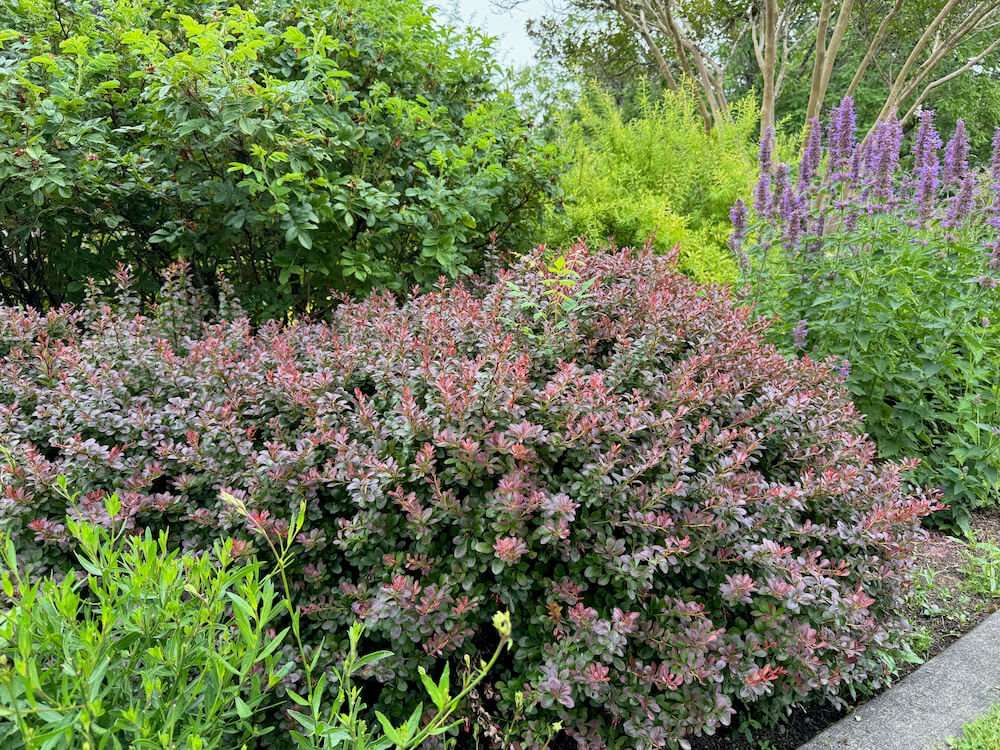
- 24 to 36 inches
- Flower color
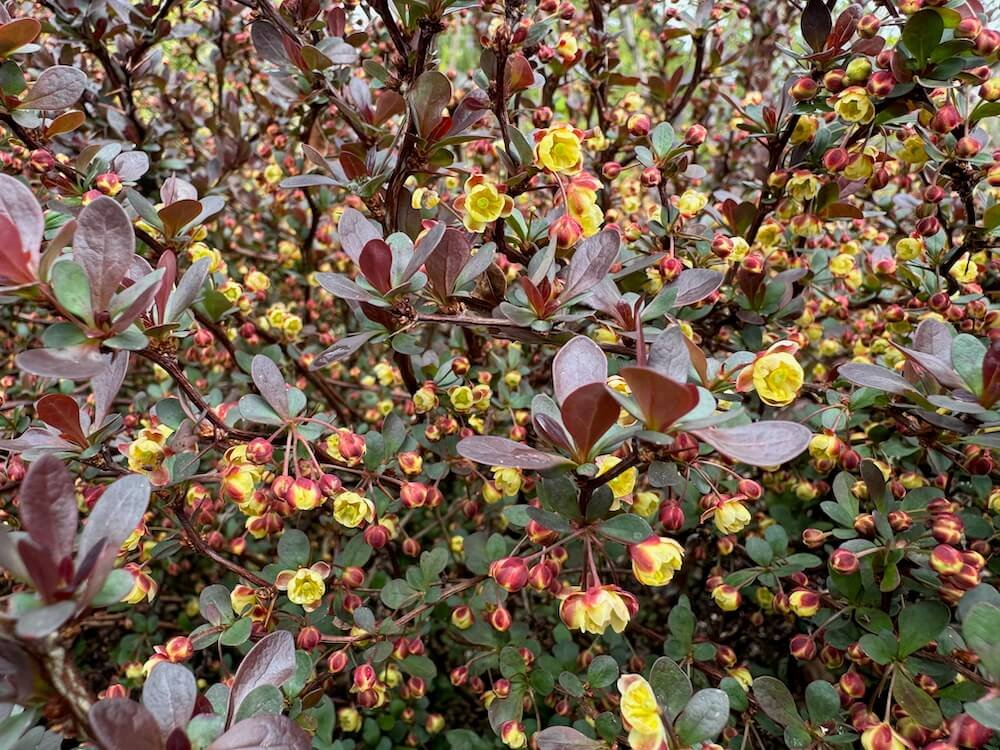
- Yellow flowers lightly flushed with red on the outer petals
- Foliage color
- Deep burgundy to purple red small oval leaves often turning brighter red in fall
- Bloom time
- Mid spring; often April to May
- Light
- Full sun to partial shade
- Water
- Average
- Maintenance
- Low; prune lightly after flowering to shape plants and remove older stems to maintain a compact habit
- Growing zone
- USDA zones 4 to 8
- Wildlife
- Bees and birds that feed on the small bright red berries
About this plant
Berberis thunbergii f. atropurpurea 'Atropurpurea Nana' forms a dense mound of small, rounded leaves colored deep burgundy to reddish-purple through the growing season. The closely spaced foliage creates a refined texture along slender stems armed with short spines. In mid spring, small yellow flowers appear along the branches, adding a soft seasonal accent among the dark leaves. By autumn, bright red berries develop and remain on the stems after the foliage turns vivid crimson.
Derived from Berberis thunbergii native to Japan, this compact selection has long been cultivated in ornamental landscapes. In gardens it provides rich foliage color for borders, foundation plantings, and formal plantings where its dense habit and autumn berries add seasonal interest.
Works well in
Specimen Plants · Formal Gardens · Borders · Pathways & Walkways
Companion plants
Abelia · Tufted hair grass · Stonecrop · Coneflower · Agastache · Blazing star
Design tip
Deep burgundy foliage can give a planting bed definition without making it feel overly formal. Try repeating several of these compact shrubs along a border or walkway, then weave lighter greens and flowering perennials between them for an easy rhythm and plenty of contrast.
Where to see it
This plant can be seen at the Bellevue Botanical Garden.