Northwest Blooms · Shrubs
Cotoneaster coriaceus
Parney Cotoneaster
- Family
- Rosaceae
- Height
- 10 to 15 feet
- Width
- 8 to 12 feet
- Flower color
- Small, white flowers in clusters
- Foliage color
- Glossy, dark green leaves that turn bronze or reddish-purple in the fall
- Bloom time
- Late spring to early summer
- Light
- Full sun to partial shade
- Water
- Low to moderate
- Maintenance
- Low; prune in late winter or early spring to shape or control size
- Growing zone
- USDA Zones 7 to 10
- Wildlife
- Birds, which are drawn to the abundant red berries that persist through winter, and pollinators, attracted to the flowers
About this plant
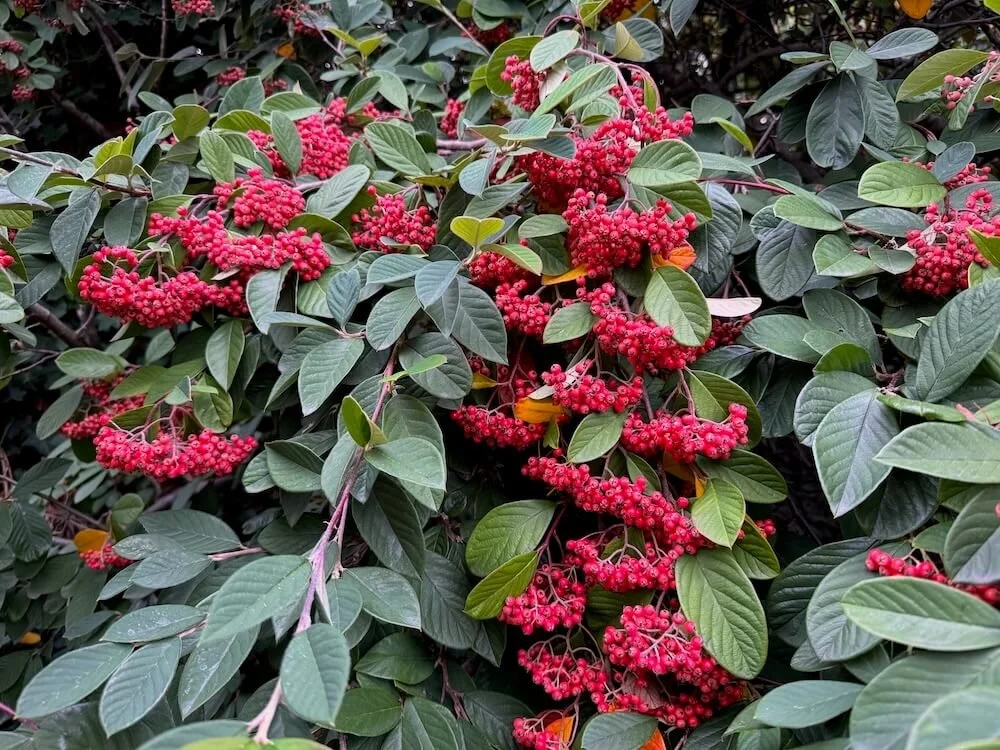
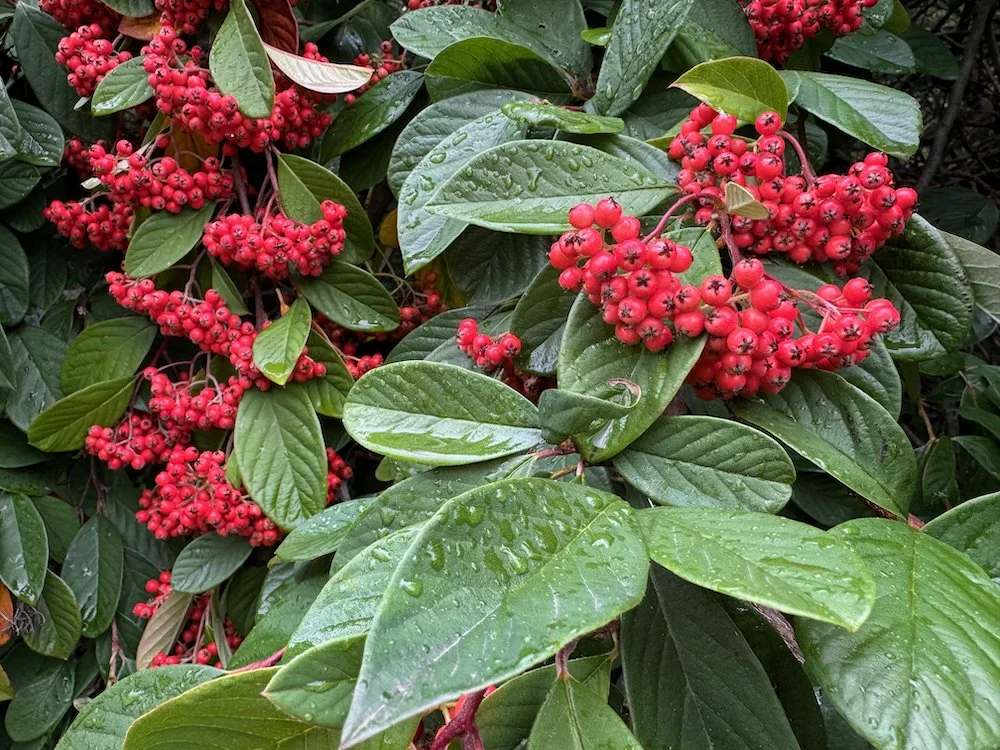
Cotoneaster coriaceus is an evergreen shrub admired for its lush foliage, small flowers, and vibrant fruit. In late spring to early summer, it produces clusters of small white flowers that attract pollinators. These blooms give way to bright red berries in autumn, which persist into winter, providing color and a valuable food source for birds.
Native to western China, Cotoneaster coriaceus is known for its arching branches and leathery, dark green leaves that offer year-round greenery. Its seasonal display of flowers and berries, combined with its elegant growth habit, makes it a versatile choice for hedges, slopes, or as a background plant in mixed borders. The shrub's ornamental qualities and wildlife-friendly attributes make it a valuable addition to a variety of garden settings.
Works well in
Sun Gardens · Hedging & Privacy · Slopes & Banks · Wildlife Gardens
Companion plants
Gaura · Weigela · Salvia · Baptisia · Lilies · Mexican feather grass
Design tip
Heavy clusters of red berries can turn this evergreen into a colorful feature from autumn well into winter. Its arching branches are especially attractive where they have room to cascade naturally, allowing the fruit to remain visible rather than disappearing into crowded surrounding foliage.