Northwest Blooms · Shrubs
Hamamelis vernalis
Ozark Witch Hazel
- Family
- Hamamelidaceae
- Height
- 6 to 10 feet
- Width
- 8 to 12 feet
- Flower color
- Bright yellow to orange-red
- Foliage color
- Dark green in summer, turning yellow in fall
- Bloom time
- Mid-winter to early spring
- Light
- Full sun to partial shade
- Water
- Prefers moist, well-drained soil
- Maintenance
- Low; minimal pruning after flowering if necessary
- Growing zone
- USDA zones 4 to 8
- Wildlife
- Attracts bees
About this plant
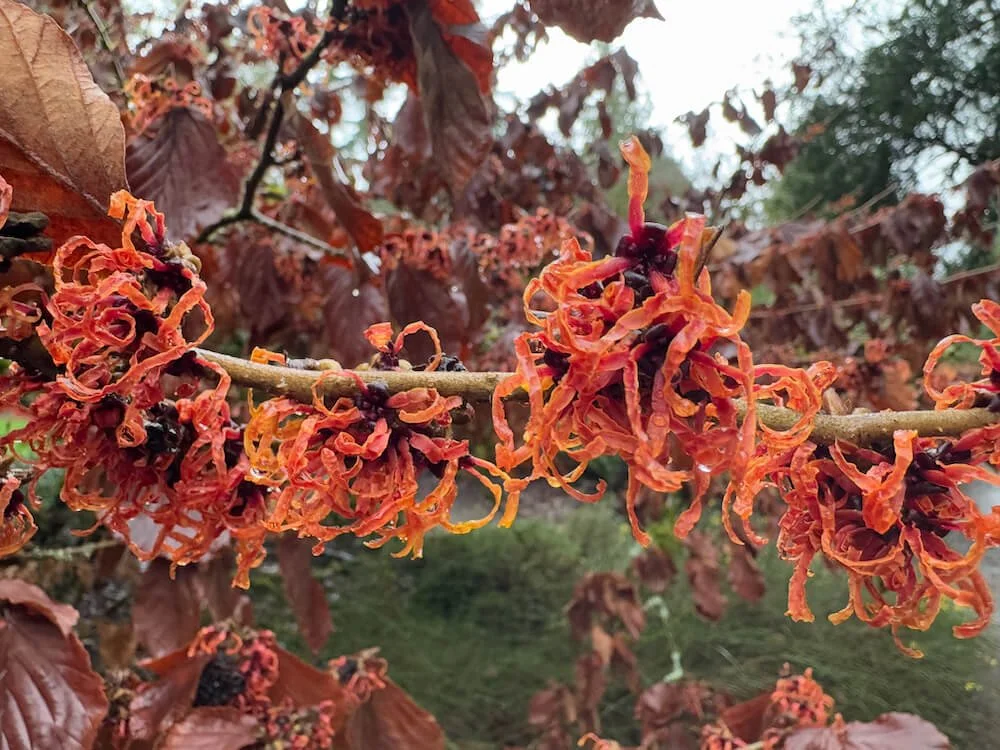
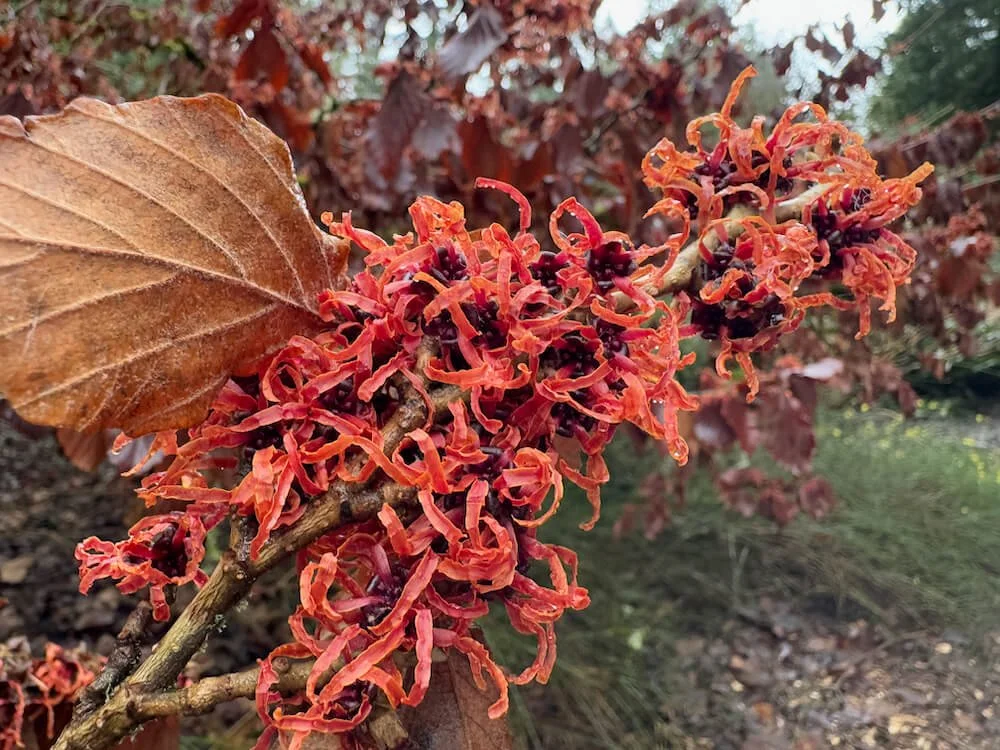
Hamamelis vernalis is a deciduous shrub that blooms from late winter into early spring. Its fragrant flowers range in color from yellow to coppery-orange and have narrow, crinkled petals that emerge along bare branches. The blooms provide a welcome burst of color in the dormant landscape, and their sweet, spicy scent adds another layer of seasonal interest. As the seasons progress, its dark green summer foliage transitions to bright yellow, orange, or red in autumn.
Native to the Ozark Plateau in Missouri, Oklahoma, and Arkansas, Hamamelis vernalis is distinguished from other witch hazels by its exceptionally long bloom time, often lasting several weeks. It also has a dense, suckering growth habit that allows it to form thickets, making it useful for naturalistic plantings and erosion control. This species is highly adaptable and thrives in a variety of conditions, making it a resilient and valuable addition to gardens looking for multi-season interest.
Works well in
Sun Gardens · Fragrant Gardens · Winter Interest · Woodland Gardens
Companion plants
Manzanita · California lilac · Poppy · Foxtail lily · Oregano · Globe artichoke
Design tip
Ozark witch hazel’s suckering habit makes it particularly effective in naturalistic plantings. Allow it to develop into a loose colony on a slope or woodland edge, where its spreading growth can help stabilize soil while creating winter interest.
Where to see it
This plant can be seen at the Washington Park Arboretum.