Northwest Blooms · Shrubs
Rosmarinus officinalis 'Prostratus'
Creeping Rosemary
- Family
- Lamiaceae
- Height
- 12 in to 24 in
- Width
- 4 ft to 8 ft
- Flower color
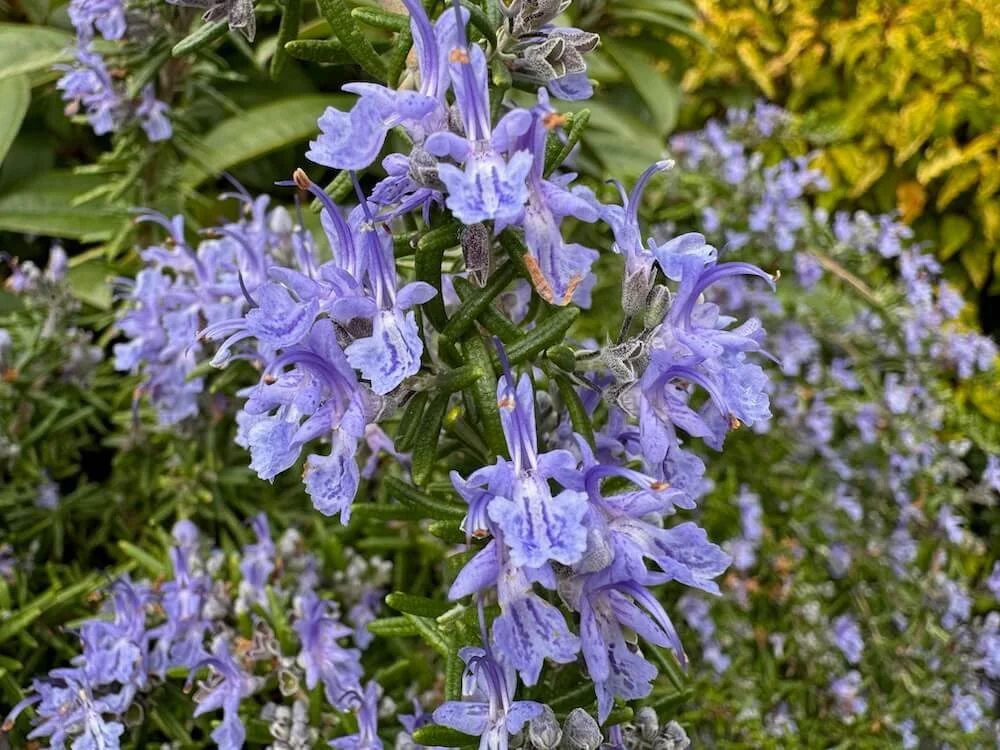
- Pale blue to lavender flowers with soft violet tones along trailing stems
- Foliage color
- Dark green needle like leaves with silvery undersides and a resinous texture
- Bloom time
- Late winter to spring
- Light
- Full sun
- Water
- Low once established
- Maintenance
- Low; trim lightly after flowering to maintain shape and prevent woodiness
- Growing zone
- USDA zones 8 to 10
- Wildlife
- Bees, pollinators and occasional hummingbirds attracted to nectar
About this plant
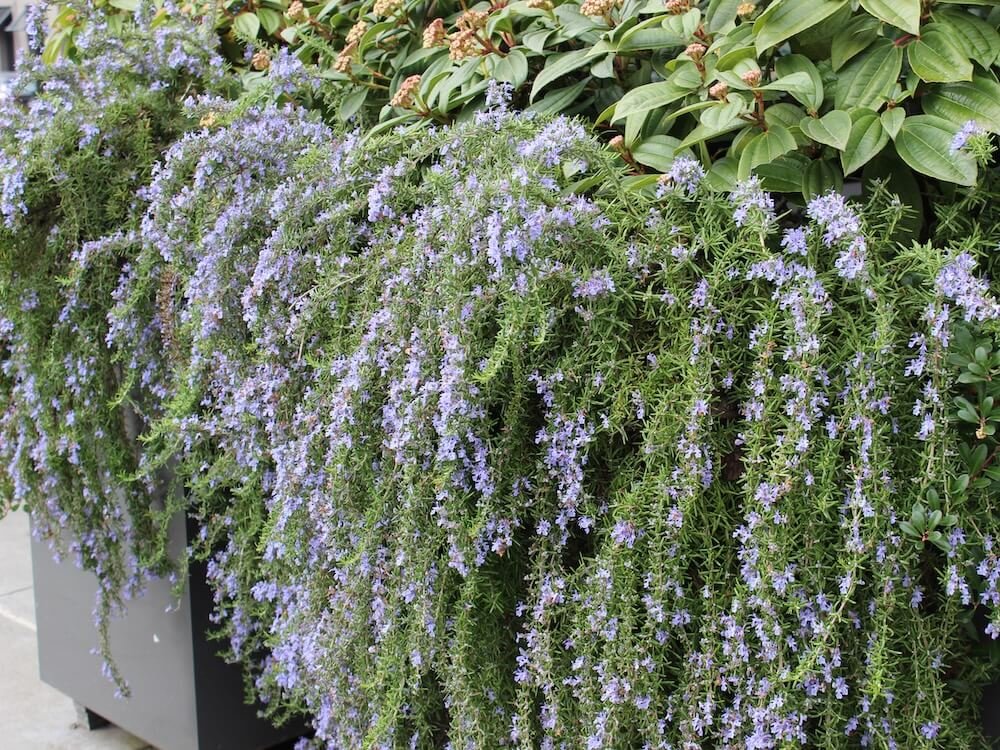
Rosmarinus officinalis 'Prostratus' produces small, pale blue to lavender-blue flowers along its trailing stems, appearing from late winter into spring with occasional repeat bloom through the year. Narrow, needle-like leaves are deep green above with a lighter underside, releasing a strong, aromatic fragrance when brushed. The foliage forms dense, cascading layers that follow the contours of the ground or spill over edges, while the flowers are spaced along the stems in loose clusters that attract bees and other early pollinators.
Native to the Mediterranean region, this cultivar reflects the species' long history in warm, coastal landscapes. It is well suited to rock gardens, retaining walls, containers, and slopes, where its trailing habit softens hard edges and creates flowing movement. Its evergreen presence and extended bloom period contribute year-round structure and seasonal interest in garden designs.
Works well in
Sun Gardens · Mediterranean Gardens · Slopes & Banks · Containers
Companion plants
Irises · Peruvian lily · Aster · Pampas grass · Stonecrop · Fothergilla
Design tip
Spill ‘Prostratus’ over the top of a retaining wall, where its long trailing stems can turn a hard vertical edge into a softer garden feature. Nearby upright plants will heighten the cascading effect and keep the composition from feeling flat.