Northwest Blooms · Shrubs
Sambucus nigra 'Variegata'
Variegated Elderberry
- Family
- Adoxaceae
- Height
- 10 to 12 feet
- Width
- 8 to 10 feet
- Flower color
- Creamy white in flat clusters
- Foliage color
- Green with creamy white variegation
- Bloom time
- Late spring to early summer
- Light
- Full sun to partial shade
- Water
- Moderate
- Maintenance
- Low; prune to shape in late winter
- Growing zone
- USDA Zones 5 to 8
- Wildlife
- Bees, butterflies, and birds (attracted to the berries)
About this plant
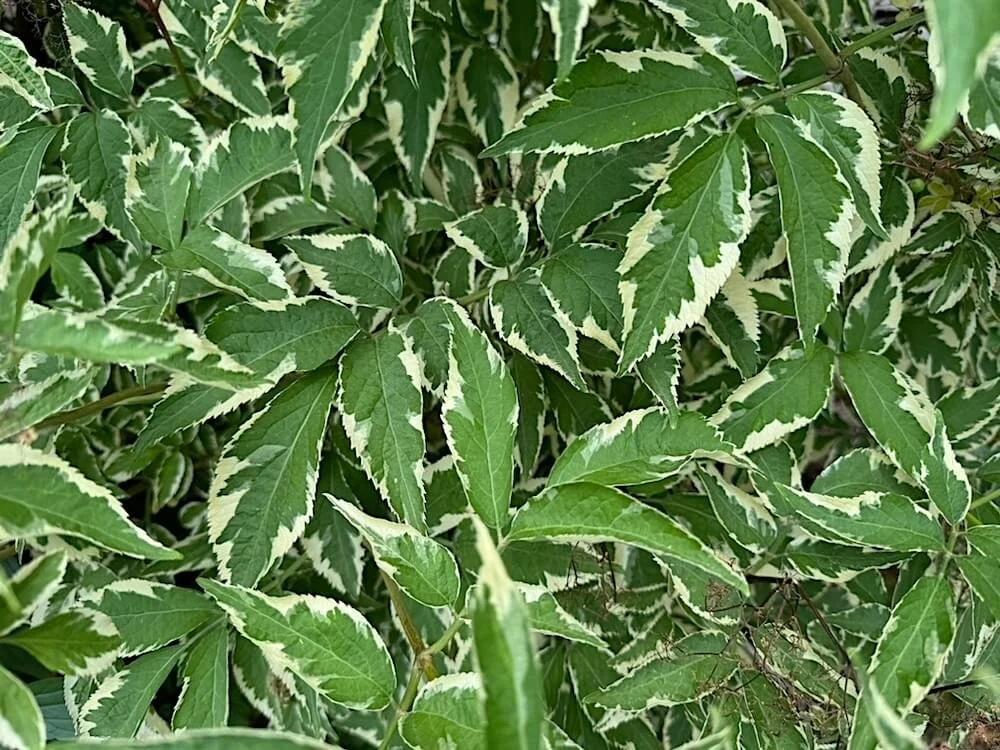
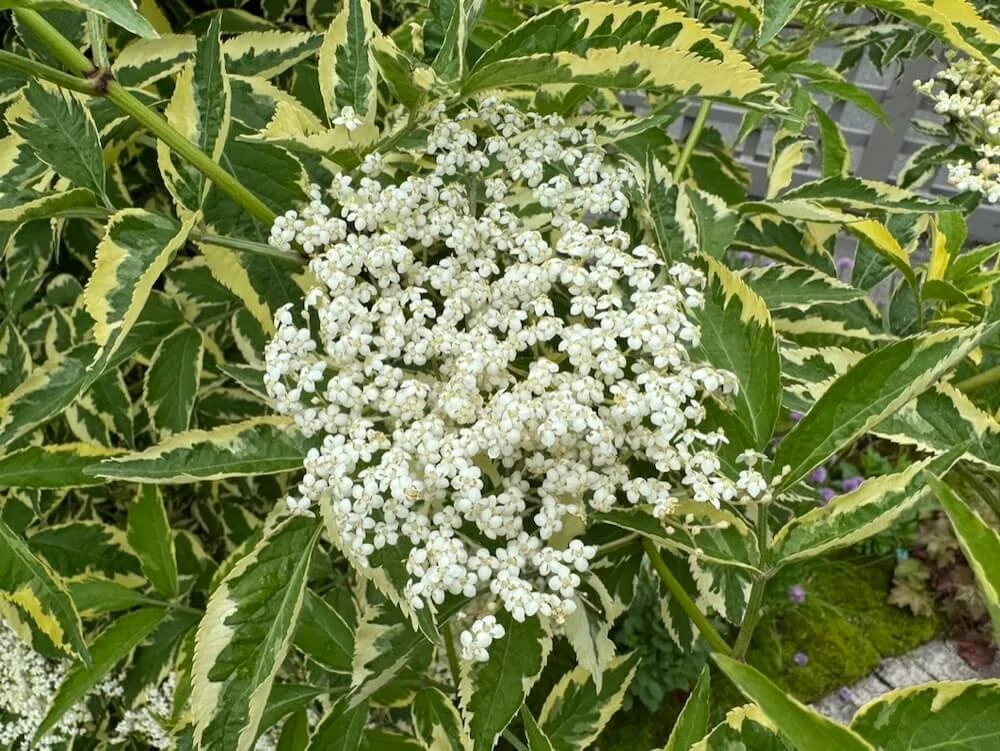
Sambucus nigra 'Variegata', commonly known as the variegated elderberry, is a deciduous shrub admired for its intricate, variegated foliage. The finely divided leaves are a rich green, edged with creamy white margins, creating a bright and textured appearance throughout the growing season. In late spring to early summer, it produces clusters of small, fragrant white flowers that attract pollinators and add a soft, lacy element to the plant's overall look.
Native to Europe, Sambucus nigra has been cultivated for centuries, and the 'Variegata' cultivar is especially valued for its ornamental qualities. Following the flowers, small dark purple-black berries appear in late summer, which can be used in culinary applications or left to feed wildlife. This elderberry is a versatile addition to borders, cottage gardens, or naturalized settings, providing year-round interest and ecological benefits.
Works well in
Sun Gardens · Foundation Plantings · Cottage Gardens · Specimen Plants
Companion plants
Lupine · Firethorn · Red valerian · Blue oat grass · Rock rose · Snow-in-summer
Design tip
Brighten the back of a deep shrub border with ‘Variegata,’ where its cream-edged foliage can lift an area that might otherwise appear heavy or overly green. Its generous size creates a leafy backdrop while the fine variegation adds detail without relying on flowers for color.
Where to see it
This plant can be seen at the Center for Urban Horticulture.