Northwest Blooms · Shrubs
Viburnum trilobum
Cranberry Viburnum
- Family
- Adoxaceae
- Height
- 8 to 12 feet
- Width
- 8 to 12 feet
- Flower color
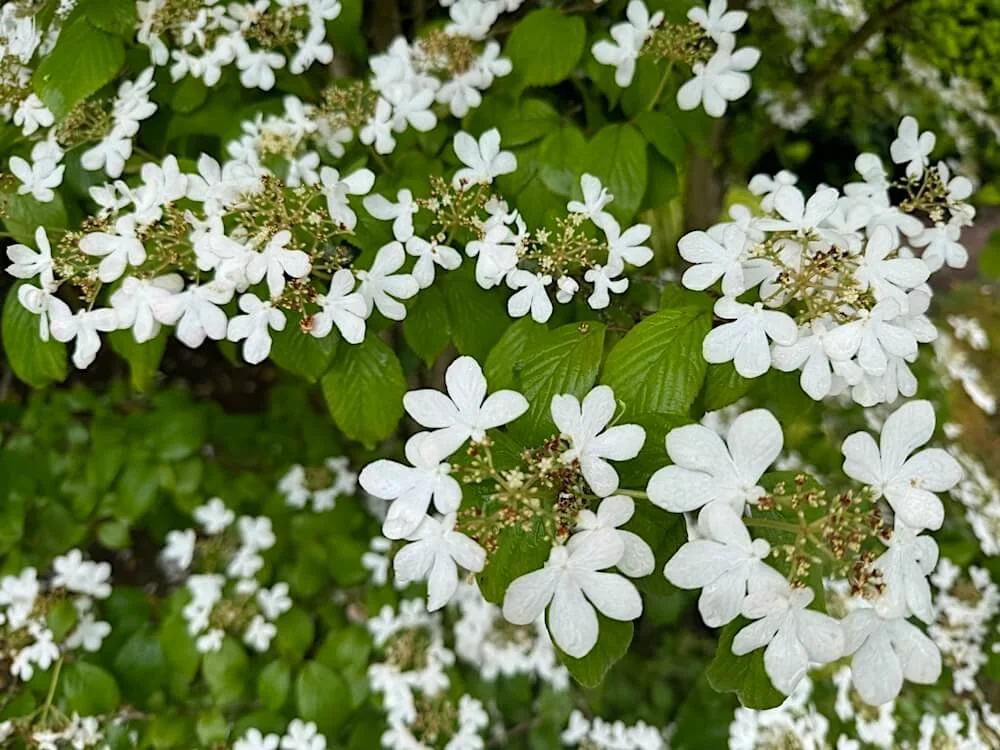
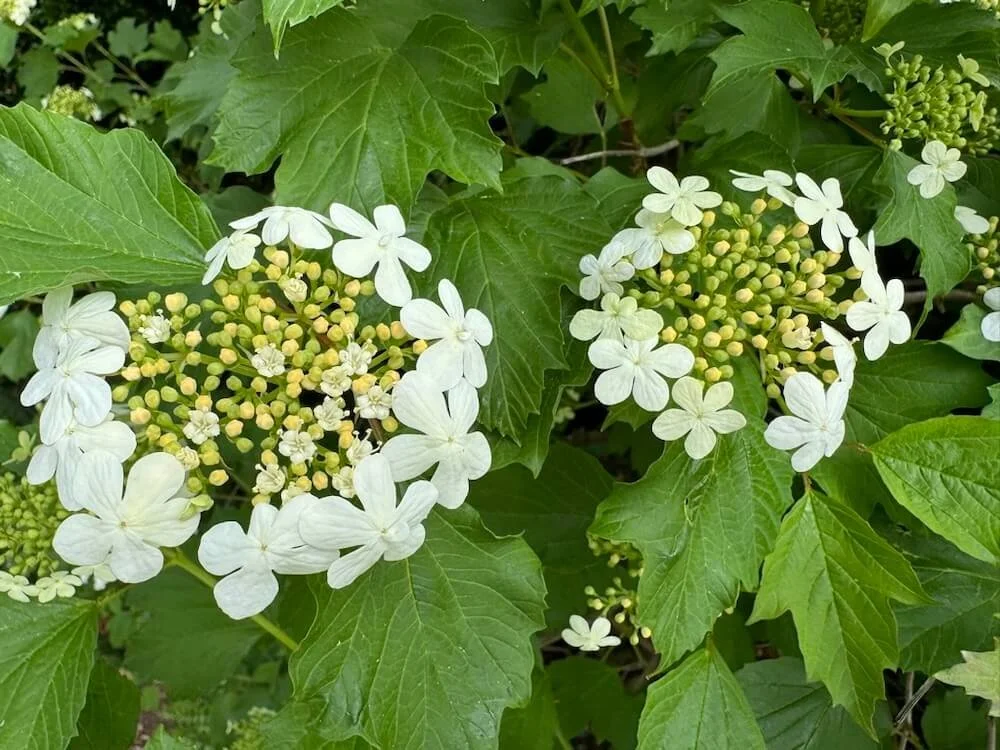
- White; flat-topped clusters resembling lacecap hydrangeas
- Foliage color
- Medium to dark green, turning red to reddish-purple in fall
- Bloom time
- Late spring to early summer
- Light
- Full sun to partial shade
- Water
- Moderate
- Maintenance
- Low; pruning needed occasionally to maintain shape and size
- Growing zone
- Hardy in zones 2 to 7
- Wildlife
- Flowers attract pollinators; bright red berries provide food for birds and other wildlife in fall and winter
About this plant
Viburnum trilobum is a deciduous shrub valued for its year-round interest. In late spring, it produces clusters of creamy white, lacecap-like flowers that attract pollinators. By late summer to fall, these flowers give way to bright red, berry-like drupes that persist into winter, providing a source of food for birds and adding seasonal color to the landscape. Its green, maple-like foliage turns vivid shades of red and orange in the autumn, enhancing its ornamental appeal.
Native to North America, Viburnum trilobum thrives in a variety of natural habitats, from woodlands to wetlands. Its adaptability and multi-seasonal interest have made it a popular choice for gardens and naturalized plantings. The shrub's combination of attractive flowers, colorful fruits, and vibrant fall foliage makes it a versatile and enduring option for enhancing wildlife-friendly or ornamental landscapes.
Companion plants
Daphne · Pearlbush · Bluestar · Rock cress · Pampas Grass · Pasque flower
Design tip
Plan around Cranberry Viburnum’s sequence of seasonal color rather than a single peak. White spring flowers give way to bright red fruit, followed by fiery autumn foliage, allowing one substantial shrub to carry visual interest from spring well into winter.