 1 / 5
1 / 5Key characteristics
- Family
- Grossulariaceae
- Height
- 4 to 8 feet
- Width
- 3 to 6 feet
- Flower color
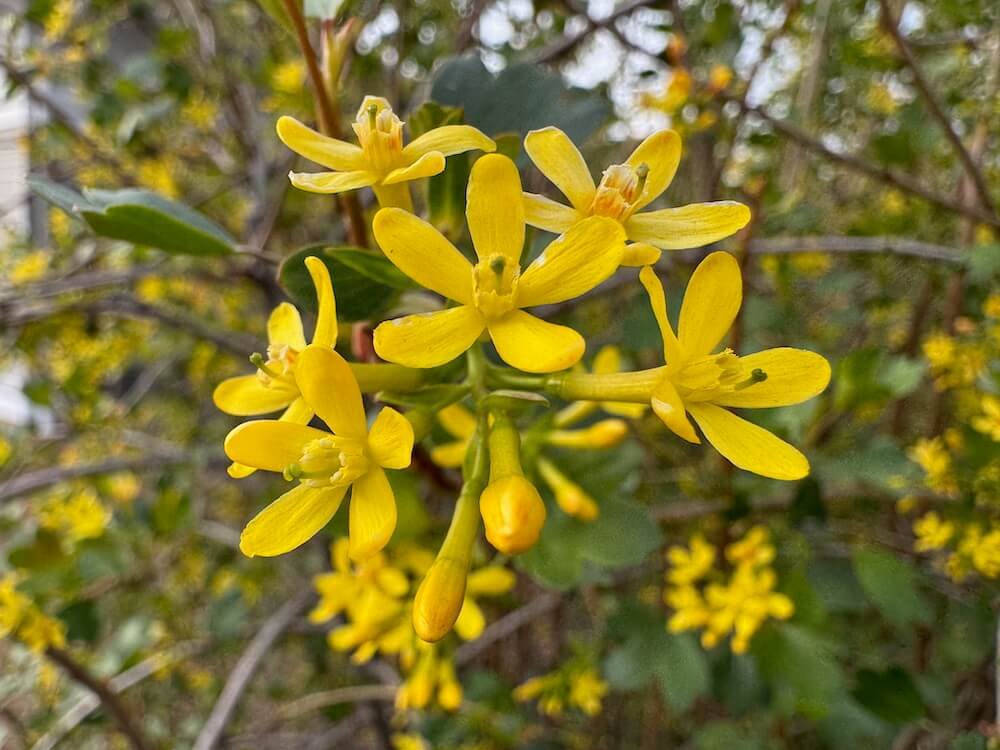
- Bright golden yellow fragrant tubular flowers sometimes aging to orange or reddish tones
- Foliage color
- Medium green lobed leaves often turning shades of red and orange in fall
- Bloom time
- Early to mid spring; often April to May
- Light
- Full sun to partial shade
- Water
- Low to average
- Maintenance
- Low; prune after flowering to shape plants and remove older stems to encourage new growth
- Growing zone
- USDA zones 3 to 8
- Wildlife
- Bees, butterflies, and hummingbirds; birds that feed on the edible berries
Shrubs
Ribes aureum
Golden Currant
Ribes aureum produces clusters of tubular yellow flowers in mid spring, the blooms opening with flared tips and releasing a sweet, clove-like fragrance along the stems. The blossoms are followed by rounded berries that ripen to deep purple to black later in the season. Lobed leaves emerge fresh green and form a soft canopy through the growing season, often developing warm yellow tones in autumn.
Works well in
- Sun Gardens
- Cottage Gardens
- Specimen Plants
- Bird Gardens
Companion plants
Tulips · Bluebeard · Feverfew · Larkspur · Sea thrifts · Beautyberry
Design tip
Grow Ribes aureum near a patio or frequently traveled path where its clove-like spring fragrance can be enjoyed without making it a formal focal point. Its loose, natural character works especially well as a transition between cultivated beds and wilder plantings.
More shrubs
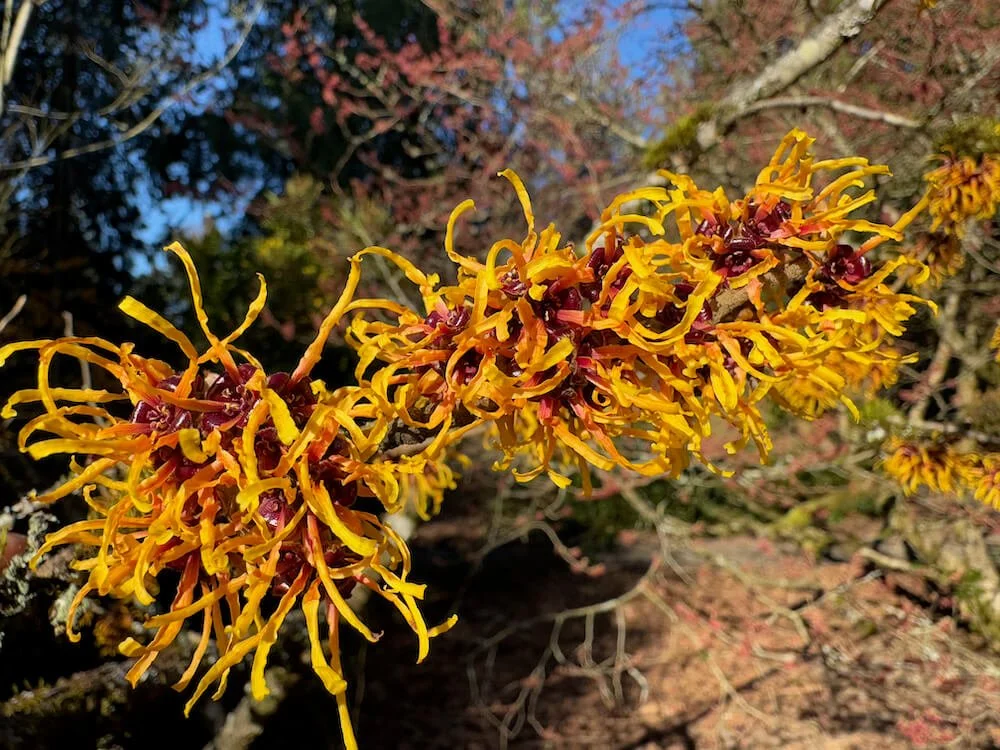
Hamamelis x intermedia 'Orange Beauty'
Orange Beauty Witch Hazel
Blooms orange-yellow petals with reddish-purple calyces
Full sun to partial shade
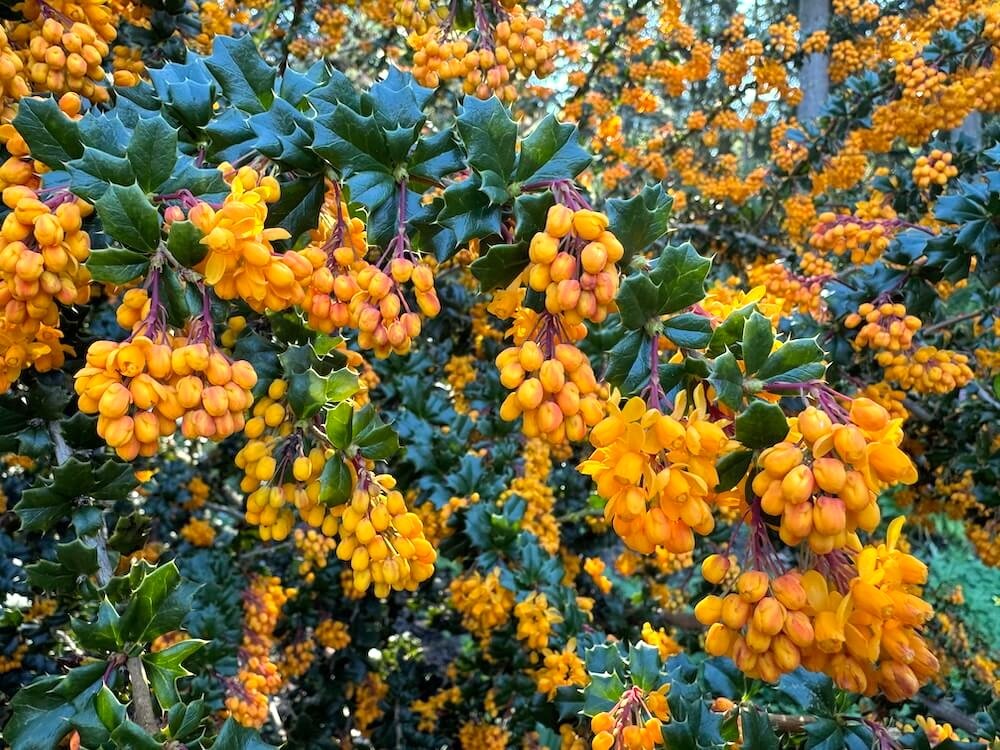
Berberis darwinii
Darwin's Barberry
Blooms deep golden orange to yellow orange flowers borne in drooping clusters
Full sun to partial shade
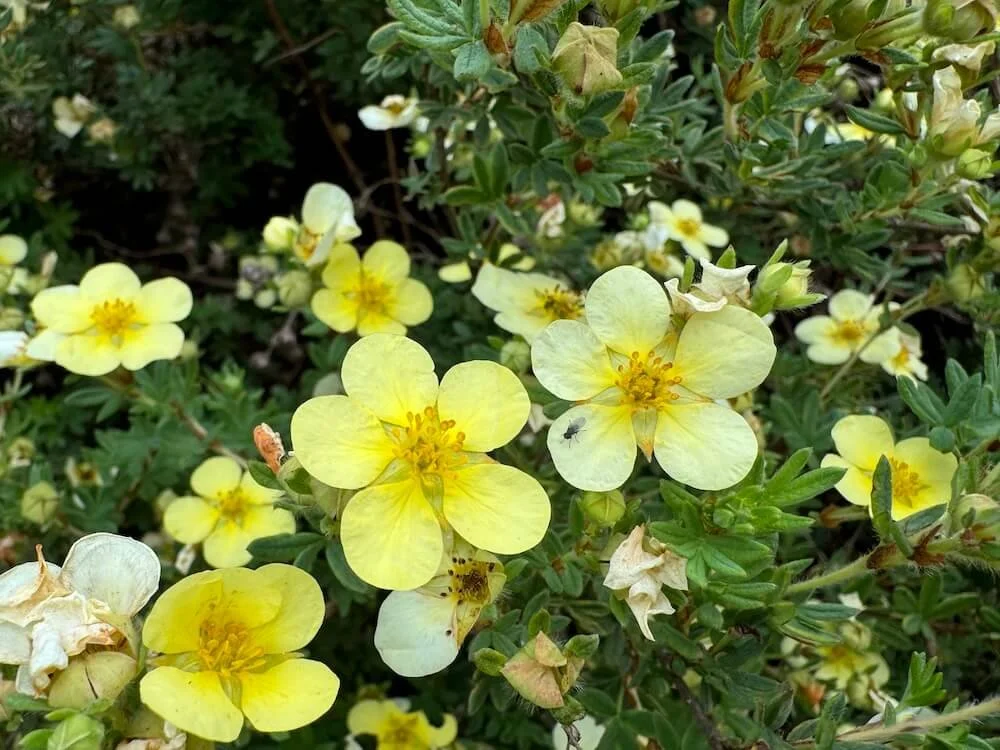
Potentilla fruticosa
Shrubby Cinquefoil
Blooms yellow, though some cultivars may have white, orange, or red flowers
Full sun
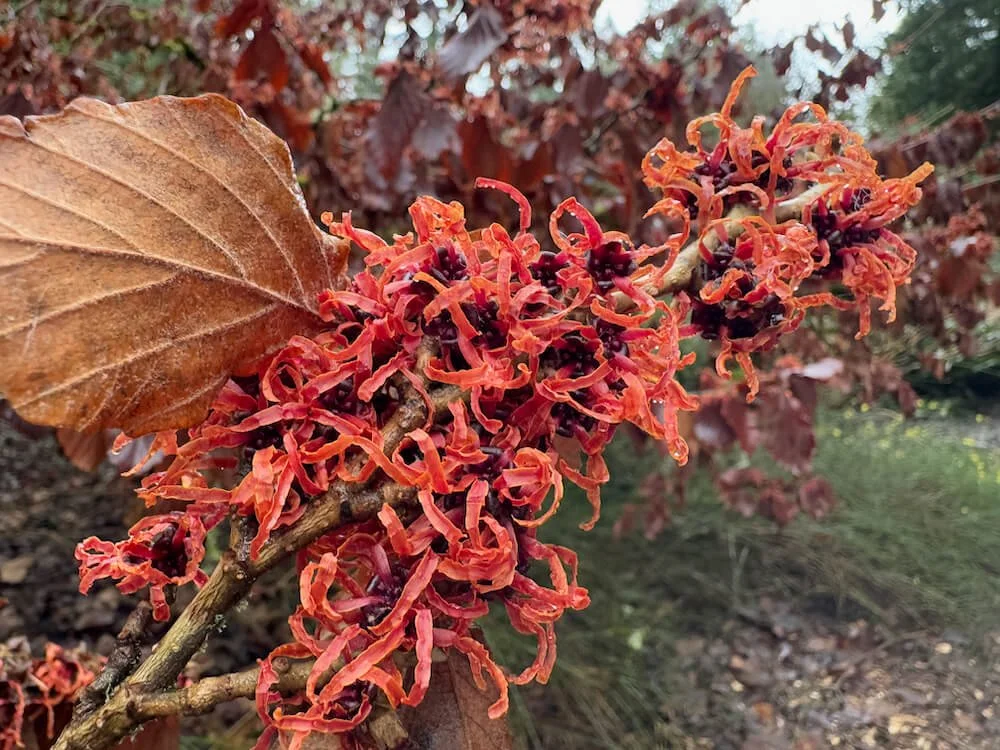
Hamamelis vernalis
Ozark Witch Hazel
Blooms bright yellow to orange-red
Full sun to partial shade