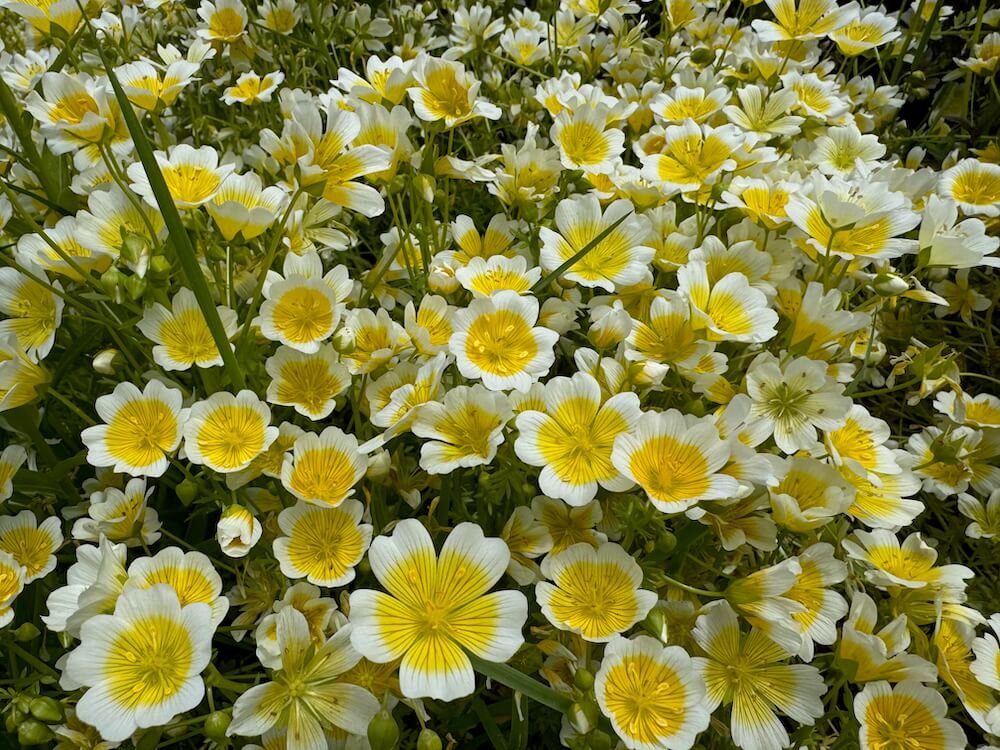
 1 / 5
1 / 5Key characteristics
- Family
- Limnanthaceae
- Height
- 6 to 12 inches tall
- Width
- 6 to 12 inches wide
- Flower color
- White petals with yellow centers
- Foliage color
- Green
- Bloom time
- Late spring to early summer
- Light
- Full sun to part shade
- Water
- Medium; prefers moist soil
- Maintenance
- Low; deadhead spent flowers to promote continuous blooming
- Growing zone
- USDA zones 7 to 10
- Wildlife
- The flowers attract bees, butterflies, and other pollinators
Groundcovers
Limnanthes douglasii
Poached Egg Plant
Limnanthes douglasii, commonly known as poached egg plant, is self-sowing annual prized for its cheerful white-and-yellow flowers and ability to attract beneficial insects. Native to western North America and part of the Limnanthaceae family, it blooms in late spring to early summer, with small, cup-shaped flowers resembling poached eggs.
Suited for sunny areas with well-draining soil, it is often used as ground cover in wildflower meadows, pollinator gardens, and rock gardens.
Works well in
- Pollinator Gardens
- Rock Gardens
- Native Gardens
- Borders
Companion plants
Yarrow · Ceanothus · Lupines · Penstemons · Poppies · Salvias
Design tip
Scatter generous drifts through sunny borders and meadow-style plantings where the cheerful flowers can mingle naturally with surrounding blooms. Blend upright perennials, evergreen shrubs, and fine-textured grasses to create a relaxed composition rich in movement, color, and pollinator activity.
Where to see it
This plant can be seen at the Bellevue Botanical Garden.
More groundcovers
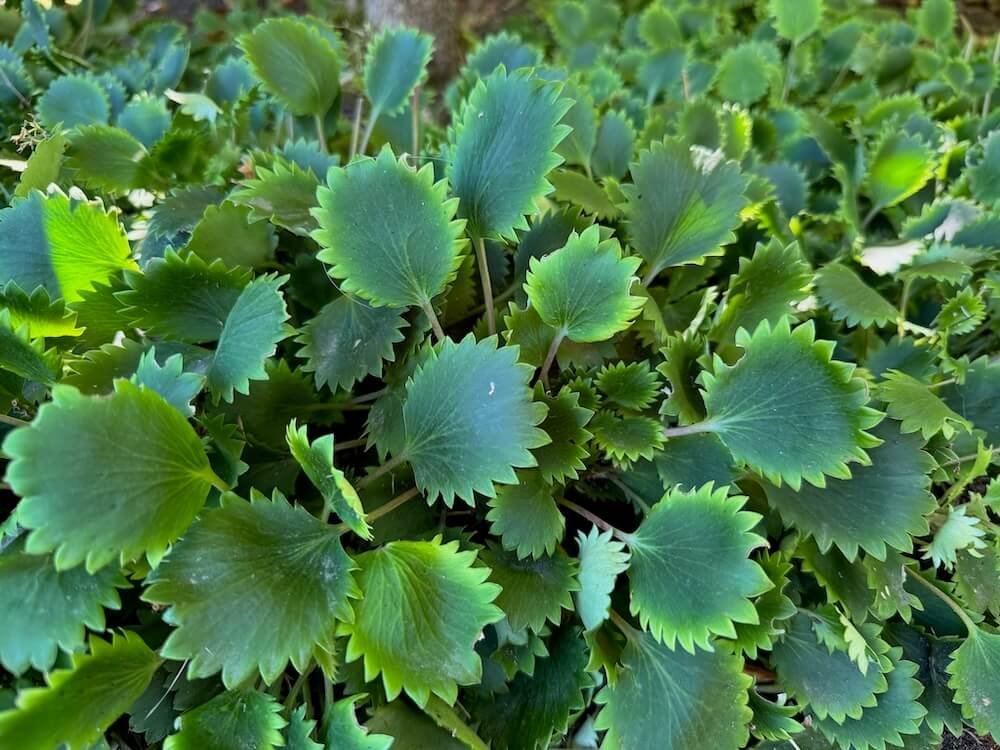
Saxifraga x geum ‘Dentata’
Dentata Saxifrage
Blooms white or light pink
Partial shade to full shade
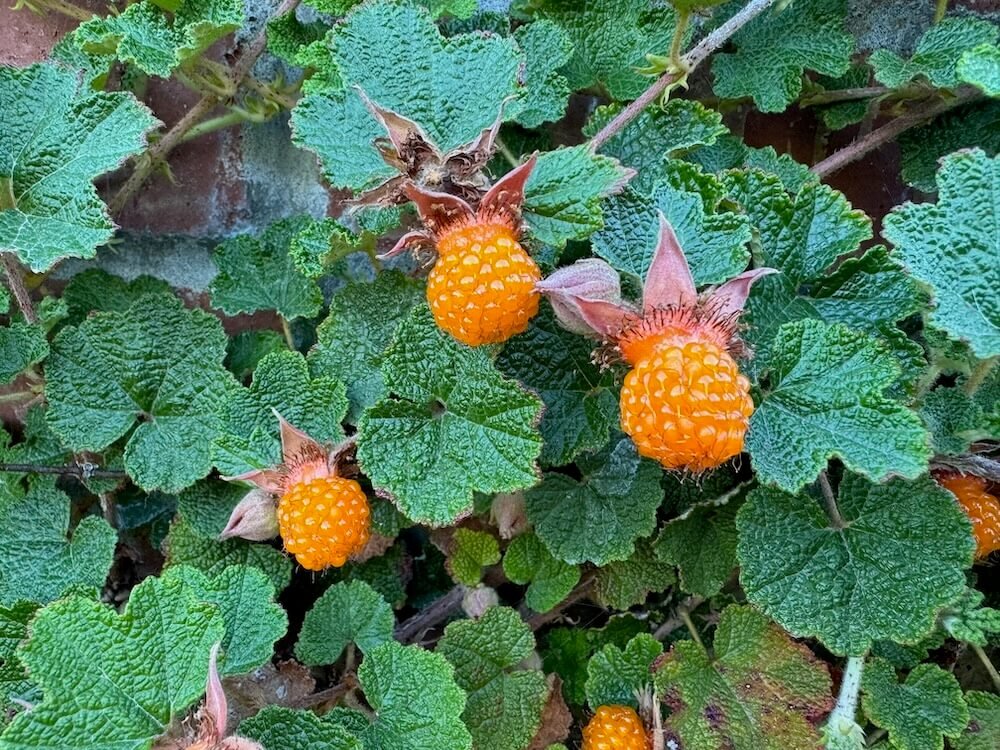
Rubus calycinoides
Creeping Raspberry
Blooms small flowers that can range from pink to white
Partial shade
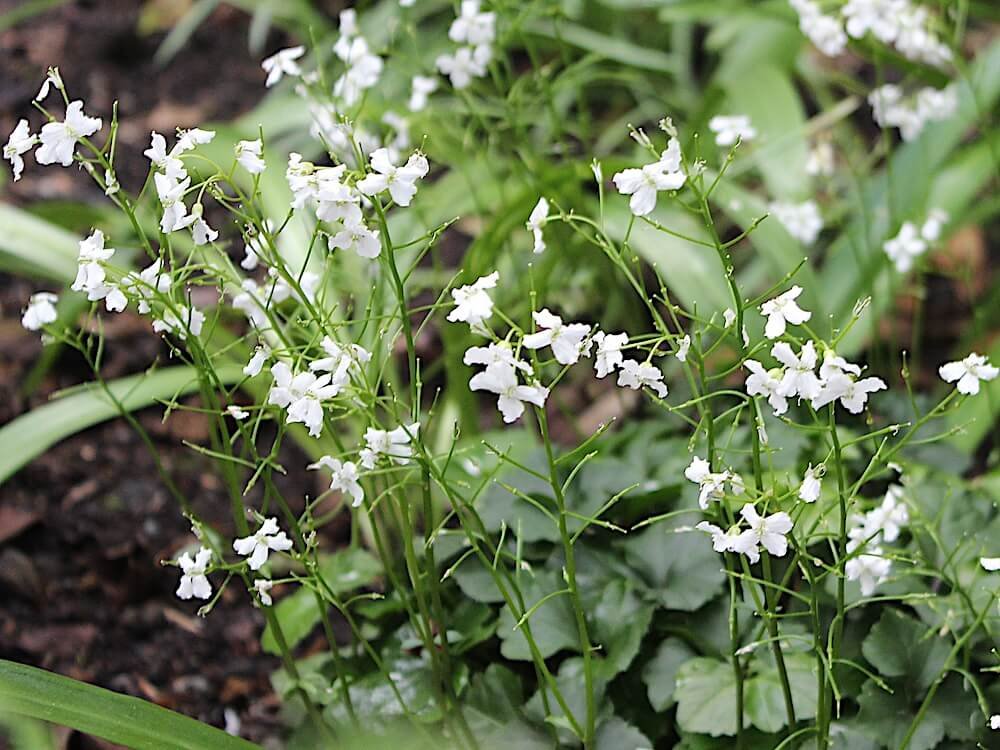
Cardamine trifolia
Three-leaf Cardamine
Blooms white
Partial to full shade
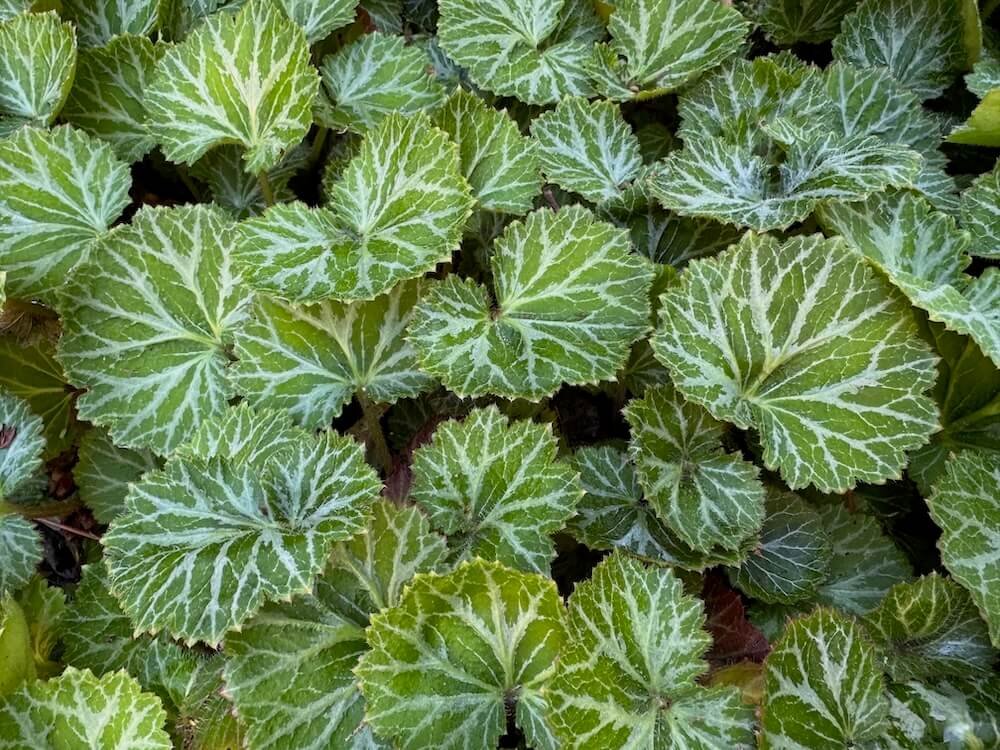
Saxifraga ‘Hsitou Silver’
Strawberry Geranium
Blooms white to pale pink
Partial shade to full shade